PM Modi Unveils Rs 3,350-Cr Development Package for Ladakh, Boosts Connectivity and Water Security
Published
4 min read 2 views
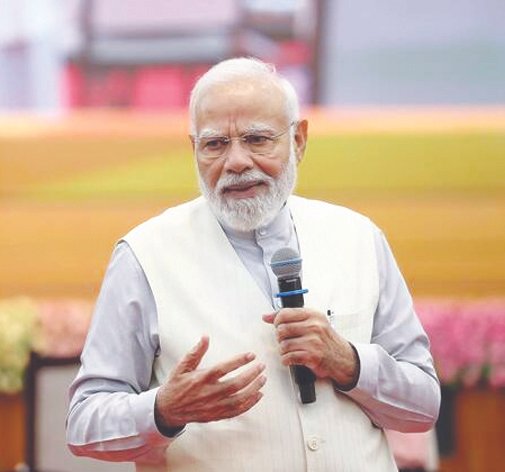
New Delhi, Oct 15 : Prime Minister Narendra Modi on Thursday inaugurated and dedicated to the nation five major development projects worth around Rs 3,350 crore in Ladakh, focusing on improving connectivity, strengthening power infrastructure, preserving cultural heritage and enhancing water security in the strategically important Himalayan region.
Describing it as “a big day for Ladakh”, Modi said the projects would accelerate development and improve the quality of life of the people.
“These projects will make travel easier, improve electricity facilities, increase water availability and give a new impetus to the conservation of our ancient heritage,” he said.
Highlighting opportunities for the younger generation, the Prime Minister said the government was working to ensure that Ladakh's youth could access quality education and learn new technologies without having to travel to other cities. A Centre of Excellence is being established in Leh to advance these objectives.
He also highlighted a new sports policy aimed at providing young people with better training and facilities to compete successfully at national and international levels.
A key component of the development package is the new passenger terminal building at Kushok Bakula Rimpochee Airport in Leh, constructed at a cost of Rs 640 crore. Spread across 23,800 square metres, the terminal is designed to handle 35 lakh passengers annually.
The facility combines elements of Ladakh's cultural heritage with modern passenger amenities and is expected to improve air connectivity and passenger convenience. Its use of geothermal energy is intended to enhance energy efficiency and reduce its carbon footprint in the ecologically fragile Himalayan region.
Modi also dedicated the 298-km Nimmu-Padum-Darcha Road, constructed by the Border Roads Organisation, providing an alternative route to Ladakh alongside the existing Srinagar-Leh and Manali-Leh highways.
Connecting Nimmu in Leh with Darcha in Himachal Pradesh through the remote Zanskar Valley, the road passes through challenging Himalayan terrain, including the high-altitude Shinkun La Pass.
Apart from strengthening strategic mobility and logistical support for the Armed Forces, the road is expected to improve residents' access to healthcare, education, markets and other essential services in a region long affected by geographical isolation.
The power infrastructure package includes the 9 MW Hanu Small Hydroelectric Project and the 66 kV double-circuit Dah-Hanu-Khaltsi transmission line. These projects are aimed at harnessing Ladakh's hydropower potential, strengthening electricity transmission and improving the reliability of the region's power network.
In a major initiative to protect Ladakh's archaeological wealth, the Prime Minister also inaugurated India's first Petroglyph Conservation Park at Sindhu Ghat in Leh.
Ladakh is home to hundreds of prehistoric rock-art sites featuring carvings of wildlife, human figures and symbolic representations. These remains offer insights into the history and cultural evolution of communities that have inhabited the region over thousands of years.
The park aims to protect these vulnerable archaeological remains, raise public awareness of their historical significance and promote responsible heritage tourism.
Water security received a significant boost with the inauguration of 40 water bodies developed across 40 villages under Project Him Sarovar. The initiative seeks to address Ladakh's unique geographical and climatic challenges by conserving water and improving its availability for agriculture, in line with the objectives of Mission Amrit Sarovar.
Farmers in Ladakh often face a seasonal mismatch between water availability and agricultural demand. While snowmelt and glacial runoff provide substantial water resources during certain periods, shortages can occur during the crucial sowing season.
The newly developed water bodies are designed to store water when it is available and make it accessible when required. The initiative is expected to improve irrigation, support agricultural livelihoods and strengthen long-term water security.
Together, the five projects address key development challenges in Ladakh, including difficult terrain, limited connectivity, unreliable power supplies, water scarcity and the need to preserve its distinctive cultural heritage.
The initiatives are expected to improve access to essential services, strengthen strategic infrastructure and support the region's broader economic and social development.