Apollo Hospitals Navi Mumbai enters Guinness World Records with 61,221 people taking CPR pledge
Published
Updated
4 min read 7 views
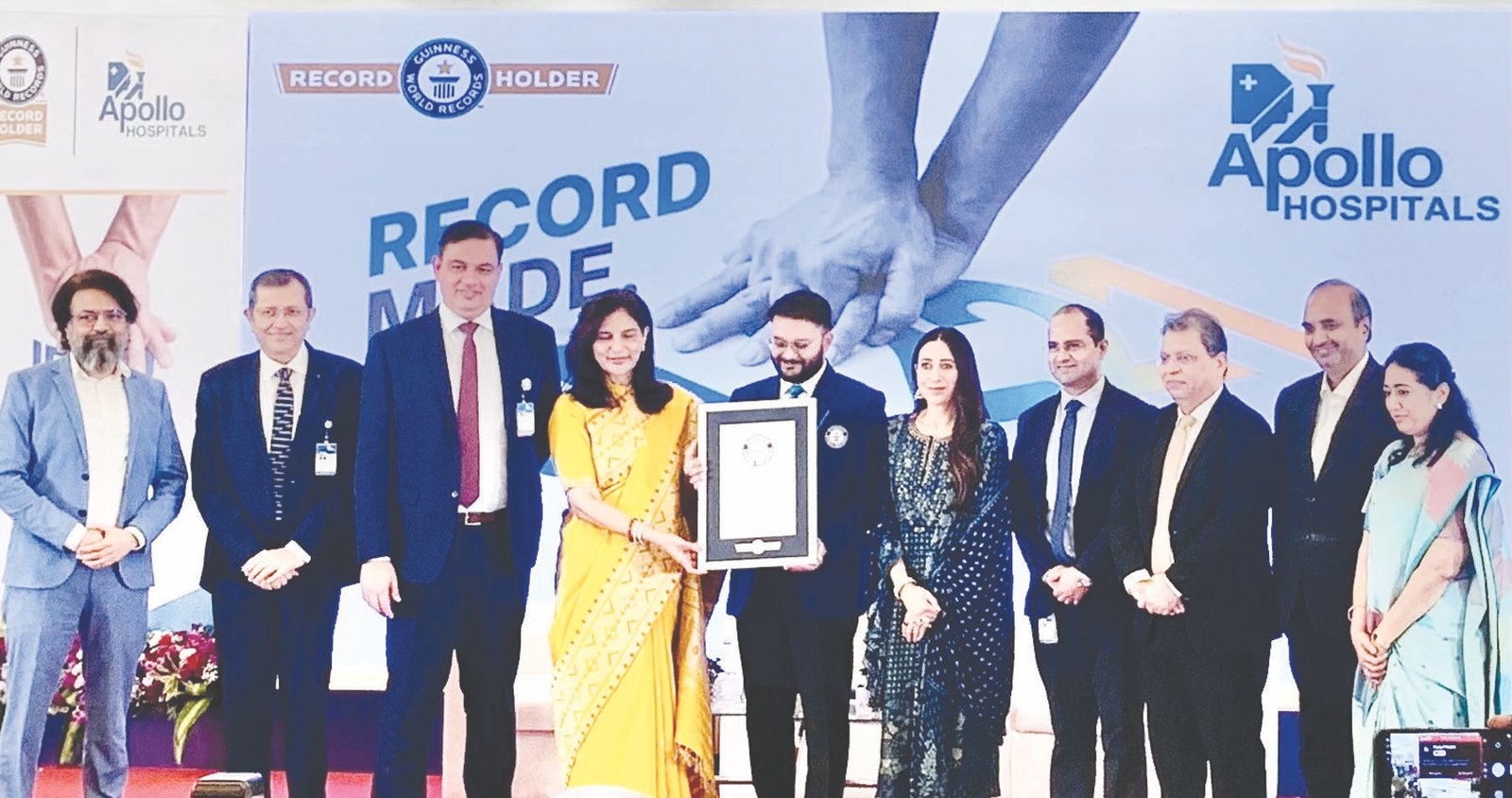
MUMBAI, SEPT 28: Apollo Hospitals Navi Mumbai has entered the Guinness World Records after 61,221 people pledged to learn cardiopulmonary resuscitation (CPR) as part of a 30-day public awareness campaign aimed at encouraging citizens to respond effectively during medical emergencies.
Titled “Sajju Ahet Maze Haath”, meaning “My Hands Are Ready”, the campaign was conducted from July 8 to August 7, 2026. Apollo Hospitals had initially set a target of 50,000 participants, but the initiative surpassed the goal and evolved into a wider public movement across Navi Mumbai.
More than 120 institutions, including schools, colleges, workplaces and social organisations, participated in the campaign. Students, teachers, healthcare workers, employees, families and members of the public joined the initiative to promote emergency preparedness and encourage people to provide immediate assistance before professional medical help arrives.
A total of 61,221 people took the CPR learning pledge, prompting Guinness World Records to officially recognise Apollo Hospitals Navi Mumbai for recording the highest number of people pledging to learn CPR in one month.
The recognition ceremony was attended by Dr Preetha Reddy, Executive Vice Chairperson of Apollo Hospitals Enterprises Limited, and actor Karisma Kapoor.
Dr Reddy said the achievement reflected the trust Navi Mumbai had placed in Apollo Hospitals over the past decade. She said more than 61,000 people were now prepared to step forward and help another person, describing the campaign as an example of the power of collective action.
She said the “Sajju Ahet Maze Haath” movement was created to take life-saving knowledge to ordinary citizens across India and prepare millions more people to respond when lives are at risk.
Apollo Hospitals Western Region Regional CEO Arunesh Punetha said the organisation aimed to take the campaign beyond Navi Mumbai and encourage people across India to learn CPR and gain confidence in responding when another person's life depends on immediate action.
He said the initiative had grown beyond a campaign into a commitment to society, every life and every family.
Apollo Hospitals Western Region Regional Director of Emergency Medicine Dr Nitin Jageshia said that during a cardiac emergency, the first person at the scene is often a family member, colleague, friend or passerby rather than a doctor or healthcare worker.
He said recognising an emergency and starting CPR immediately can be crucial, as the period before professional medical assistance arrives can be decisive.
The campaign also highlighted the gap between CPR awareness and the ability to provide it during an emergency. More than 700,000 people are estimated to die every year in India following sudden cardiac arrest. In out-of-hospital cardiac arrests, studies indicate that only around 1.3 per cent to 9.8 per cent of victims receive CPR from a bystander.
In cities, only around 2 per cent to 6.5 per cent of the public is reported to have the ability to perform CPR, while survival and discharge rates for out-of-hospital cardiac arrest remain below 2 per cent to 3 per cent.
Apollo Hospitals said the figures underline the need to equip ordinary people with the knowledge and confidence to act before medical professionals arrive.
The “Sajju Ahet Maze Haath” campaign seeks to turn people's willingness to help into the preparedness required to take the right action at the right time.
Apollo Hospitals was founded by Dr Prathap Reddy, who established the first Apollo Hospital in Chennai in 1983. The organisation has since expanded into an integrated healthcare network with more than 10,400 beds across 76 hospitals, over 7,113 pharmacies, 308 clinics, 2,457 diagnostic centres and more than 800 telemedicine centres.
Apollo is also among the leading cardiac care providers globally, having performed more than 300,000 angioplasties and over 200,000 surgeries. The group has more than 120,000 employees and continues to invest in research, innovation, advanced technology, equipment and treatment methods.