Trump Orders US Government to Replace ‘AI’ With ‘Super Intelligence’ in Official Communications
Published
3 min read 1 views
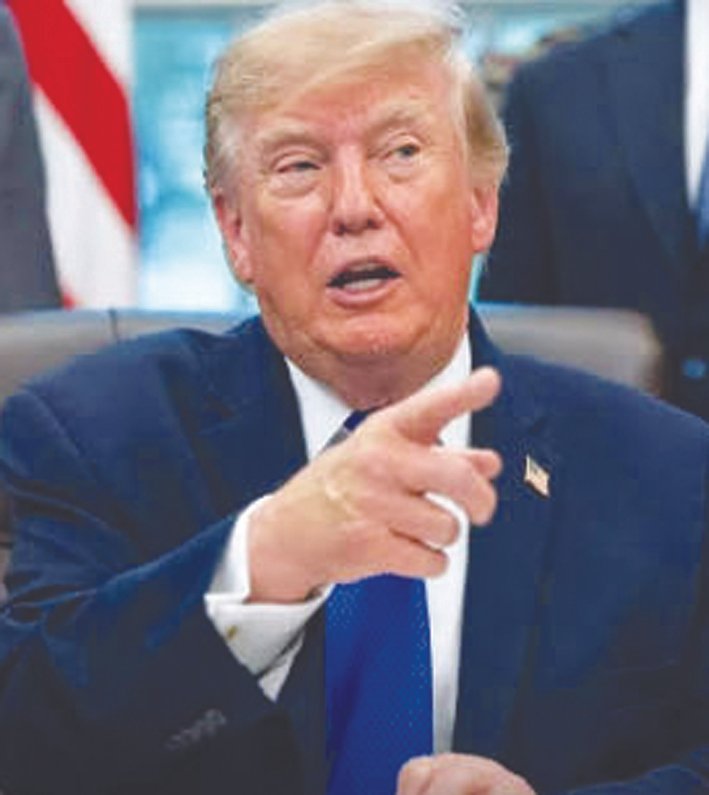
WASHINGTON, Sept 30 : US President Donald Trump has signed an executive order directing federal government departments and agencies to replace the terms “artificial intelligence” and “AI” with “Super Intelligence” and “SI” in official communications.
The order, titled “Inaugurating the Era of Super Intelligence,” directs executive departments and agencies to use “Super Intelligence” and “SI” in official correspondence, public communications, websites, reports and policy documents to the maximum extent permitted by law.
The White House said agencies would also be directed to no longer acknowledge the terms “artificial intelligence” and “AI” in applicable official settings.
“The term ‘Super Intelligence’ more appropriately captures the promise, potential, and rapidly advancing capabilities of these technologies,” Trump wrote in the order.
The directive argues that modern frontier systems have moved beyond the original concept of artificial intelligence and increasingly amplify human ingenuity and enable new forms of creativity.
“The capabilities of today’s frontier systems do much more than imitate or automate discrete aspects of human intelligence,” the order states, adding that the technology is increasingly being used to advance science, medicine and other areas of human endeavour.
The order directs the Assistant to the President for Science and Technology to develop a federal definition of “Super Intelligence” and recommend additional executive actions needed to implement the new terminology.
The official has been given 60 days to submit proposed legislative language to Congress for an updated statutory definition and related amendments to existing US laws. Until then, the administration will apply the existing statutory definition of artificial intelligence under Title 15 of the US Code to “Super Intelligence.”
The directive does not retroactively alter previously issued regulations, existing government contracts, grants or historical archival records.
Trump has also said his administration would not limit the development of artificial intelligence or support calls for additional “guardrails” or restrictions.
“I will never stifle the growth of a technology that will be bigger than the industrial revolution,” Trump said while unveiling an AI chatbot, America.gov, intended to help Americans navigate government services.
Trump had called for the terminology change during his address to the United Nations General Assembly last week.
“Whoever wins AI, you have to remember this, and now I say whoever wins SI, whoever wins superintelligence, wins,” Trump said.
The executive order follows a White House summit attended by leading technology executives, including SpaceX and Tesla chief Elon Musk, Meta CEO Mark Zuckerberg, Google CEO Sundar Pichai and NVIDIA CEO Jensen Huang.
Trump said the executives had signed a document described as the White House Accord on Super Intelligence, which he characterized as a voluntary but significant commitment.
“They almost viewed it as a separate kind of constitution,” Trump said of the technology leaders and the accord.
House Speaker Mike Johnson said discussions at the summit focused on balancing the interests of Americans, technological development and the United States’ competitiveness with China.
“This is a statement of principles that you’ll see, a statement of standards, commitments that are voluntary on behalf of the industry. It sets forth expectations,” Johnson said, describing the commitments as involving internal controls and multiple layers of internal and external review.
Meta CEO Mark Zuckerberg later described the summit as a “positive step,” saying the leaders of major American AI laboratories had committed to implementing internal controls and multiple layers of audits and reviews.
The terminology change marks another step in the Trump administration’s effort to frame the rapid development of advanced AI systems as the beginning of what it calls a new era of “Super Intelligence.”