Jairam Ramesh Questions Delay in Prorogation of Parliament, Alleges Govt Keeping Monsoon Session Alive for Delimitation
Published
Updated
3 min read 15 views
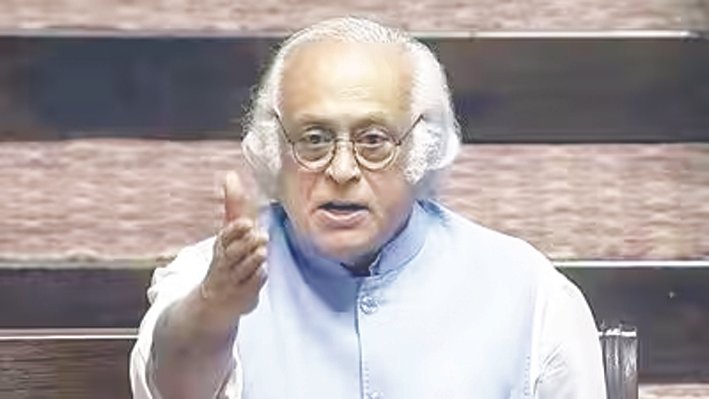
New Delhi, Sep 7 : Congress general secretary in-charge of communications Jairam Ramesh on Monday questioned the Centre's decision to delay the formal prorogation of Parliament, saying it was unusual that 25 days had passed since the 2026 Monsoon Session was adjourned sine die.
"Today is exactly 25 days since Parliament was adjourned sine die. But it has still NOT been prorogued," Ramesh said in a statement.
He said Parliament is generally prorogued within three or four days of being adjourned sine die, though there have been instances when governments have kept a session alive for a longer period to facilitate legislative business.
Citing the 2015 Monsoon Session, Ramesh said the gap between adjournment sine die and prorogation had stretched to 28 days. He recalled that the session had been severely disrupted over the controversy surrounding former IPL commissioner Lalit Modi.
"That session had been washed out almost entirely over the Lalit Modi issue but the Modi Govt kept the session alive hoping to bulldoze the GST Bills through," he said.
Ramesh said the government at the time did not have the two-thirds majority in the Rajya Sabha required for the constitutional amendment relating to the Goods and Services Tax. He said the government was eventually compelled to engage more substantively with the Opposition before the GST legislation could be passed.
Drawing a parallel with the present situation, Ramesh alleged that the 2026 Monsoon Session was being kept alive as the government continued efforts to secure the numbers required to advance its proposed delimitation legislation.
"The 2026 Monsoon Session has been kept on ventilator because the Home Minister is still scrambling for his super-tainted two-thirds majority to get the Delimitation Bills passed," he alleged.
The proposed delimitation exercise has emerged as a major point of contention between the government and Opposition parties. The exercise is linked to the reconfiguration of parliamentary constituencies and the implementation of women's reservation, with potential implications for representation in the Lok Sabha and the federal balance.
Opposition parties have expressed concerns over the possible impact of delimitation on the political representation of states that have made greater progress in population control. They have also called for wider consultations with states and political parties before any major changes are undertaken.
Ramesh also targeted Union Home Minister Amit Shah, questioning how long the government could continue seeking support for the proposed legislation without building a broader political consensus.
"How much longer before he accepts the reality that his politics of threats and intimidation has reached its limit?" Ramesh asked.
The Congress has maintained that delimitation and related constitutional changes should not be pushed through solely on the basis of the government's numerical strength, arguing that changes affecting parliamentary representation require extensive consultations and broad political agreement.
Under parliamentary procedure, adjournment sine die ends the proceedings of a sitting without fixing a date for the next sitting, while prorogation formally brings the session to an end. A session adjourned sine die can therefore remain available for the government to reconvene, subject to the applicable constitutional and parliamentary procedures.
Against this backdrop, the Congress has interpreted the continued non-prorogation of the Monsoon Session as an indication that the government wants to retain the option of reconvening Parliament if it secures the numbers needed to advance its legislative agenda, particularly the proposed delimitation measures.