Jairam Ramesh Questions State-Specific UCCs, Says ‘Uniform’ Code Cannot Mean Different Laws in Every State
Published
Updated
4 min read 5 views
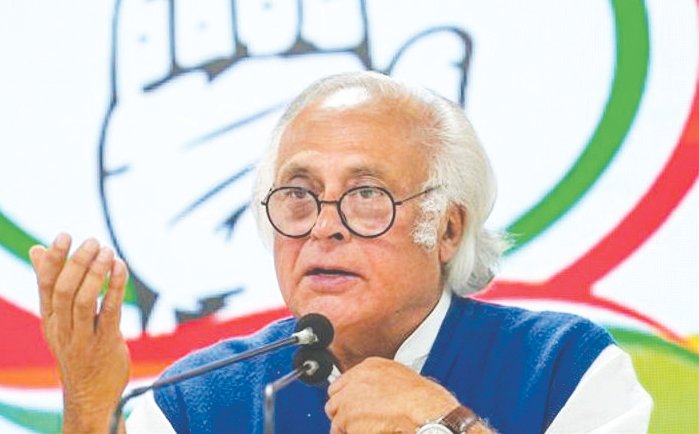
New Delhi, Sep 23 : Congress general secretary Jairam Ramesh on Wednesday questioned the constitutional rationale behind individual states framing their own versions of a Uniform Civil Code (UCC), saying the resignation of former Bombay High Court judge Justice R.C. Chavan from the Maharashtra government's UCC committee has raised broader questions about the exercise.
Justice Chavan, a member of the seven-member committee headed by retired Supreme Court judge Justice Ranjana Desai, resigned on September 19, reportedly citing differences over the panel's consultation process and the involvement of a person who was not formally appointed as a committee member.
Ramesh said the development had brought renewed focus on the manner in which Maharashtra's proposed UCC legislation was being formulated.
"Did the Constituent Assembly ever imagine a situation in which every state will enact its own separate version of a UCC? The answer is a resounding no," Ramesh said in a statement.
He questioned whether the framers of the Constitution, led by Dr B.R. Ambedkar, had envisaged individual states competing to formulate different UCCs based on the political calculations of individual parties.
Ramesh also recalled that the Narendra Modi government had referred the issue of a Uniform Civil Code to the 21st Law Commission of India on June 17, 2016, for detailed examination.
The Law Commission subsequently released its Consultation Paper on Reform of Family Law on August 31, 2018. Ramesh cited paragraph 1.15 of the document, which said that the formulation of a Uniform Civil Code was "neither necessary nor desirable at this stage". The commission had instead advocated reforms aimed at addressing discrimination within individual family laws while preserving India's legal and cultural diversity.
Ramesh alleged that the government had disregarded the commission's findings because they did not fit its political agenda.
He also pointed to UCC initiatives in several BJP-ruled states. Uttarakhand became the first state to implement a UCC on January 27, 2025. The Gujarat Assembly passed its UCC Bill on March 24, 2026, followed by Assam on May 27 and Madhya Pradesh on July 21.
According to Ramesh, these state-level UCCs are not uniform, with differences in their provisions, penalties, procedures and exemptions. He argued that this raises a fundamental question about how separate state-specific codes can be reconciled with the constitutional concept of a "uniform" civil code.
Ramesh also criticised the Uttarakhand law, alleging that it retained several patriarchal practices and had created difficulties for some law-abiding residents.
The Maharashtra committee has itself faced scrutiny over its consultation process. Justice Chavan reportedly objected to the manner in which the questionnaire for public feedback was finalised and to the alleged participation of an official who was not formally appointed to the committee.
Ramesh further referred to the Union Home Minister's announcement that a UCC would be implemented in all NDA-ruled states before the 2029 Lok Sabha election. He alleged that the issue was being pursued as a political project rather than as a legal reform requiring extensive consultation, public debate and consensus.
"For the Modi Government, the UCC is not an instrument of considered legal reform to be implemented after the widest possible consultations and public debate and with the broadest possible consensus," Ramesh said.
He further alleged that the UCC had become "an instrument of division, disruption and diversion" and a means of "stoking prejudices and keeping society in a state of permanent polarisation."
The constitutional debate over the UCC centres on Article 44, which directs the State to endeavour to secure a Uniform Civil Code for citizens throughout India. As part of the Directive Principles of State Policy, Article 44 does not itself prescribe a specific legislative model or a timeline for implementation.
The debate has increasingly shifted towards state-level initiatives, with Uttarakhand's UCC already in force and several other BJP-ruled states pursuing their own legislative frameworks.
Ramesh's latest intervention has brought renewed attention to a central constitutional question: if different states adopt substantially different civil codes, to what extent can such laws be described as a "Uniform Civil Code"?