Jaishankar Warns of ‘Hobbesian’ World as Global Rules Erode, Calls for Diversified Partnerships
Published
Updated
4 min read 4 views
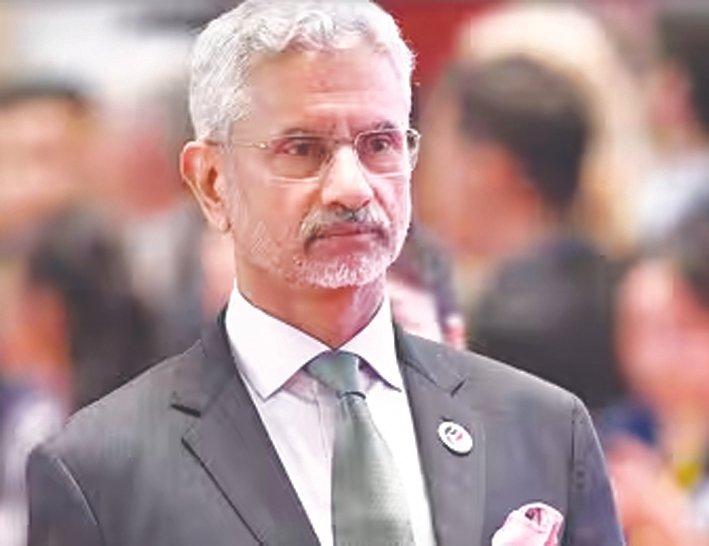
NEW YORK, Sep 29 : External Affairs Minister S. Jaishankar has warned that the erosion of global rules and the growing preference for bilateral deals could push the world towards a more competitive and potentially “Hobbesian” order, stressing that India would respond by diversifying its partnerships and safeguarding its strategic interests.
Speaking at the Asia Society on the sidelines of the UN General Assembly session, Jaishankar said the international system was undergoing a fundamental shift, with countries increasingly defining their national interests more sharply and negotiating new bargains instead of relying on the assumptions of the old global order.
“The pretense has dropped for everybody. Everybody is openly dealing with everybody else,” he said, describing the trend as part of the world’s movement towards multipolarity.
Jaishankar said countries were increasingly seeking the best possible deals based on their own interests, adding that the approach had gained wider momentum after Washington began pursuing it more openly.
On the erosion of global rules, he said the trend could not be attributed solely to the United States, arguing that rules had been weakened over a longer period, particularly in the economic and trade spheres.
“The rules have been continuously eroded over a period of time, particularly economic rules,” he said, pointing to the widening gap between market-based trading principles and actual trade practices.
He said the US was now promoting a trade template increasingly based on bilateral agreements, which could challenge assumptions underpinning the earlier multilateral trading system.
“When the US now sets a new trading template, which is we'll have one-to-one deals... you are striking, in a sense, at the heart of the earlier assumption,” Jaishankar said.
He noted that disputes between major powers often had consequences for countries that had little role in creating them. “From the perspective of another country, in this case, let us say India, part of our problem is the complaints may be emanating from some other country, but the reactions are actually visited on us,” he said.
Asked whether the emerging multipolar order could descend into a “Hobbesian jungle” dominated by survival of the fittest, Jaishankar said the outcome would depend on whether countries were able to establish mechanisms and safety nets to contain escalating competition.
“We could end up with something much more in the direction of that Hobbesian world,” he cautioned.
At the same time, Jaishankar said he was “not pessimistic about the world”, noting that countries would have an interest in preserving stability because excessive volatility would carry significant economic costs.
Describing India’s approach to the changing global order, Jaishankar said New Delhi would seek to maintain relationships with a broad range a right balance between, say, the US, Europe, Japan, China, Russia, Gulf, ASEAN, and parts of the global south of powers rather than becoming excessively dependent on any single country.
“We would now try to say, OK, in my relationship, how do I get a right balance between, say, the US, Europe, Japan, China, Russia, Gulf, ASEAN, and parts of the global south,” he said.
He described the strategy as a “portfolio management approach”, arguing that diversification could provide greater stability in an increasingly uncertain international environment.
“The more you diversify, and you find common interests, common ground, I think the more of a balancing structure can be created,” he said.
On India-China relations, Jaishankar said ties were “better” than they had been a couple of years ago, linking the improvement to the easing of tensions along the border.
“The state or the border determines the state of the relationship. You can't have tension, if not worse, on the border and say the relationship should be normal,” he said.
He added that India had consistently conveyed to China that prolonged tensions did not serve the interests of either side and could instead benefit third parties.
“Don't get locked into a problem which benefits others,” Jaishankar said.
On India-Japan ties, the External Affairs Minister highlighted growing cooperation in investment, supply-chain diversification, semiconductors and advanced manufacturing. He said Japanese companies were increasingly looking to India to leverage its talent and local partnerships.
He also pointed to expanding defence cooperation between the two countries, noting that India and Japan shared interests as maritime and Indo-Pacific powers.
Jaishankar said Japan, too, recognised the value of having a wider network of partners as it sought to diversify its international relationships.
He further highlighted growing societal exchanges between India and Japan, including efforts to increase student mobility and meet rising demand for Japanese-language education in India.