PM Modi pitches BRICS as platform for Global South, calls for resilience and inclusive growth
Published
Updated
5 min read 5 views
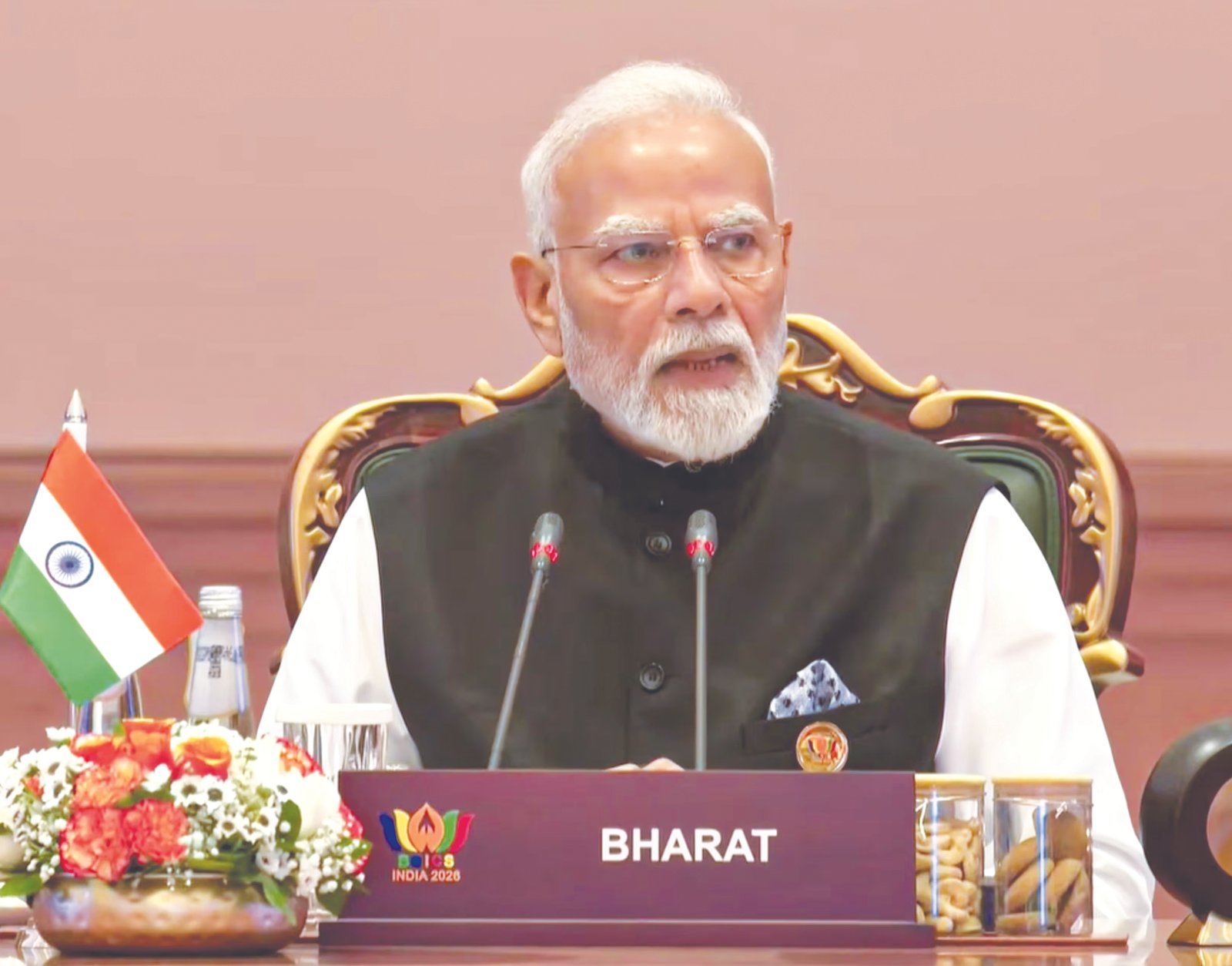
NEW DELHI, Sep 13 : Prime Minister Narendra Modi on Sunday called for a stronger, more resilient and inclusive BRICS, asserting that the grouping must transform its growing diversity and influence into practical solutions for the wider Global South.
Addressing the session on “Resilience, Innovation, Cooperation, and Sustainability: Shaping the Future for Inclusive Global Development” on the second day of the 18th BRICS Summit at Bharat Mandapam, Mr Modi said the gathering reflected the expanding reach and confidence of a grouping that now brings together countries from different continents, cultures and development trajectories.
“Today this hall is bringing together different continents, cultures and development journeys. This is a testimony to the growing strength, attraction and unprecedented confidence in BRICS,” he said.
India, which assumed the BRICS chairmanship on January 1, has based its presidency on four pillars — resilience, innovation, cooperation and sustainability. Mr Modi said New Delhi had worked with member countries to translate this shared vision into practical and mutually beneficial initiatives.
Against the backdrop of geopolitical tensions, economic uncertainty, climate-related disasters and disruptions to global supply chains, the Prime Minister stressed the need for greater collective preparedness.
“The number of tensions in the world is continuously increasing, and it is also having a very negative and widespread impact on the lives of ordinary people,” he said.
Referring to the COVID-19 pandemic, climate disasters and supply-chain disruptions, Mr Modi said the interconnected nature of the world meant that no crisis remained confined to one region.
“Challenges must be identified in time, we must be prepared for them and it is equally necessary to act immediately,” he said.
Under the resilience pillar, BRICS countries have agreed to work towards an Integrated Early Warning System for the prevention of and response to infectious diseases. India has also advanced Early Warning Data Integration Guidelines for disaster management and a BRICS Logistics Supply Chain Cooperation Framework aimed at making supply networks more reliable and resilient.
Mr Modi said resilience must be complemented by innovation, particularly as rapid technological changes reshape economies and societies. The BRICS Incubator Network would connect start-ups and incubators across member countries, while India has proposed a BRICS Startup Innovation Fund to support innovative and scalable solutions.
The BRICS Network on Digital Agriculture, he said, would seek to connect artificial intelligence, geospatial technologies and digital public infrastructure with the needs of farmers, creating opportunities to improve productivity, access to information and agricultural resilience.
At the same time, the Prime Minister cautioned against the weaponisation of emerging technologies and critical minerals.
“Technology and critical minerals' weaponisation can become an obstacle to our shared progress,” he said, underlining the need for inclusive access to technology and resources.
Mr Modi also called for broader participation in BRICS cooperation, saying that entrepreneurs, farmers, researchers, women, young people and ordinary citizens must become active participants in the grouping's agenda.
Through BRICS CONNECT, cooperation has been promoted in areas such as skills, employability, women's participation in the workforce, social security and capacity building. A BRICS MSME Cooperation Portal has also been proposed to help small businesses gain access to knowledge, finance and new markets.
The Prime Minister highlighted sustainability as another key pillar, drawing on India's civilisational approach to the relationship between nature and development.
“In Indian civilisation, nature has been given the status of mother,” he said, stressing that sustainability was both an environmental responsibility and a commitment to future generations.
BRICS cooperation on smart grids and energy storage through a Digital Centre of Excellence could help make clean-energy systems more reliable, efficient and accessible, he said. The grouping is also advancing Centres of Excellence on agro-ecology and regenerative agriculture, combining traditional knowledge with modern scientific methods.
Mr Modi said the ultimate measure of BRICS cooperation would be whether its initiatives could benefit countries beyond the grouping.
“Solutions developed in BRICS should not be limited only to BRICS,” he said, calling for such solutions to be made “adaptable and accessible” according to the needs of the Global South.
He said the growing confidence of developing countries in BRICS was driven by the grouping's approach of listening to their concerns and respecting their experience.
“I can say from my personal experience that the confidence of the countries of the Global South in BRICS has increased because in BRICS, their voice is heard, their experience is respected, and solutions are created not for them, but together with them,” Mr Modi said.
The emphasis on the Global South reflects the transformation of BRICS from its original five-member format. With 11 members spanning Asia, Africa, the Middle East and Latin America, the grouping has gained greater demographic, economic and geopolitical weight and emerged as an important forum for developing and emerging economies seeking a stronger role in global governance.
India has used its 2026 BRICS presidency to emphasise development cooperation, technological inclusion and the concerns of the Global South, while presenting the grouping as a diverse platform where countries can cooperate on common challenges despite differences in political systems and strategic priorities.
Mr Modi said diversity was one of BRICS' principal strengths when combined with a commitment to cooperation and collective progress.
“We may be rooted in different realities, but together, we rise through cooperation, and blossom for humanity,” he said.
“Our diversity should remain our identity, our cooperation should be our inspiration, and our progress should serve all of humanity,” the Prime Minister added.
The address presented the New Delhi summit as a test of whether an expanded BRICS can translate its growing economic and political influence into concrete responses to challenges that increasingly cross national borders. For India, the four pillars of resilience, innovation, cooperation and sustainability provide the framework for making BRICS-led solutions relevant not only to its members but to the wider Global South and the international community.