Putin-Modi talks to focus on trade, defence and Ukraine at BRICS summit
Published
Updated
4 min read 3 views
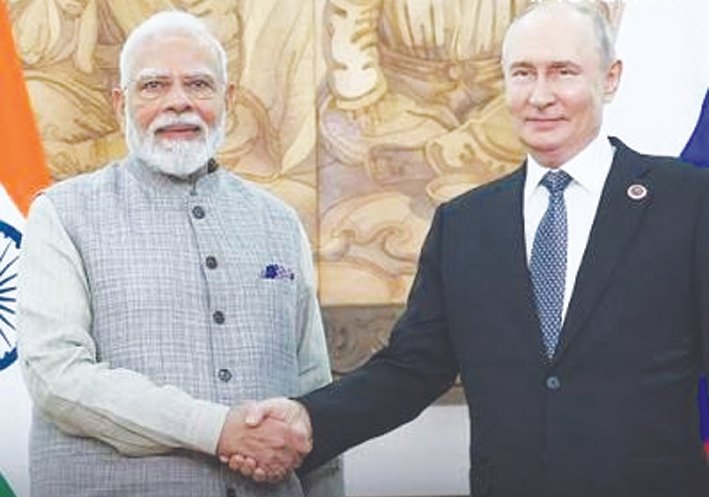
NEW DELHI, Sep 8 : Russian President Vladimir Putin and Prime Minister Narendra Modi are expected to focus on strengthening economic and defence ties, the Ukraine conflict and the situation in Iran during their bilateral meeting on the sidelines of the BRICS summit here later this week.
The talks are likely to cover expanded cooperation in areas including nuclear energy, defence production and trade, Kremlin spokesman Dmitry Peskov said while briefing Indian journalists at an online press conference organised by the Indian arm of Russian news agency Sputnik.
Moscow has also indicated its willingness to offer India access to some of its most advanced military technology, including possible cooperation on the Su-57 fifth-generation fighter aircraft.
“We have very good military equipment. Some of that equipment is the best in the world, and we are ready to share that equipment with our Indian partners,” Peskov said.
The Modi-Putin meeting comes as India seeks to manage growing pressure from Washington over its trade and energy ties with Russia. The two countries are also exploring ways to expand bilateral commerce despite financial restrictions imposed on Moscow over the Ukraine conflict.
Peskov said Russia was seeking to increase its presence in the Indian market and was gradually reducing the rupee balances accumulated through the countries’ rupee-rouble trading arrangements, which have been used for crude oil purchases.
The issue of payment mechanisms is also expected to feature prominently in wider BRICS discussions, amid efforts by member countries to increase trade in national currencies.
Peskov rejected the characterisation of Russia’s policy as a campaign of “de-dollarisation”, saying Moscow was instead seeking payment mechanisms that best served its national interests.
“We are not in favour of any de-dollarisation policy. We are simply doing what better corresponds with our national interests,” he said, adding that around 90 per cent of Russia’s trade with BRICS countries is now conducted in national currencies.
BRICS leaders from the original members — India, Russia, China, Brazil and South Africa — along with leaders of newer members including Iran, Saudi Arabia, Egypt, Indonesia, the UAE and Ethiopia, are expected to attend the summit.
The Ukraine conflict is likely to be another key issue during the Modi-Putin talks. India has repeatedly called for an end to the war through dialogue and diplomacy while maintaining its longstanding strategic relationship with Moscow.
Peskov said Russia welcomed “all steps” aimed at ending the conflict, including initiatives involving India and the United States. He also reiterated Moscow’s position that sanctions against Russia should form part of negotiations on any eventual settlement.
The meeting comes amid renewed diplomatic efforts by Washington and Moscow to explore a possible settlement to the Ukraine conflict.
The situation in Iran and its impact on global energy markets is also expected to figure in the discussions. Peskov warned that continuing tensions around the Persian Gulf were affecting the global economy and said Russia supported unrestricted commercial shipping through the Strait of Hormuz.
“The situation, unfortunately, and the atmosphere in the Strait of Hormuz are still very tense,” he said, stressing the importance of free passage for merchant vessels and oil tankers.
The issue is of particular importance to India, one of the world’s largest energy importers, as higher oil prices and disruptions around the Strait of Hormuz could put additional pressure on the rupee and the country’s external balance.
Peskov also rejected US President Donald Trump’s recent suggestion regarding American ownership of the Moon, saying Moscow opposed the privatisation of outer space.
“I don’t think that we can support the idea of privatisation of space,” he said, adding that outer space should remain free from such claims.