Qatar Emir Calls for Stronger Gulf Shipping Security, Condemns Iranian Attacks
Published
Updated
4 min read 3 views
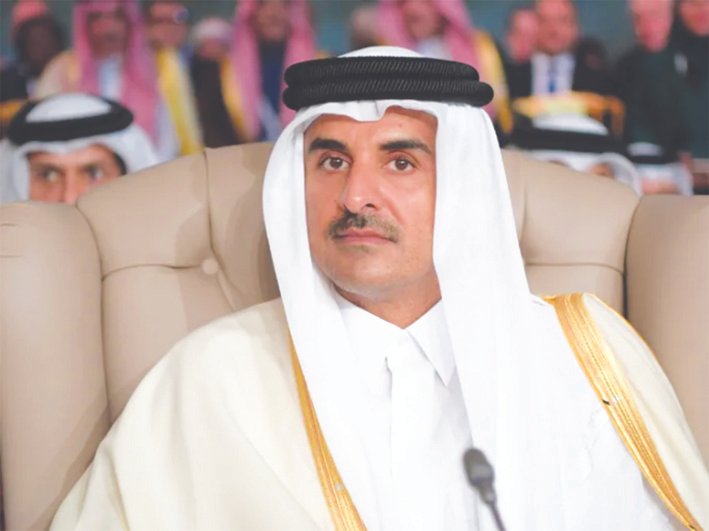
Doha, Oct 13 : Qatar's Emir Sheikh Tamim bin Hamad Al Thani on Tuesday called for intensified efforts to secure shipping in the Gulf and the Strait of Hormuz, condemning Iranian attacks on Qatar as a “flagrant violation” of the country's sovereignty.
Addressing the opening of the Shura Council's annual session, the first since the war with Iran began, Sheikh Tamim stressed that the security and sovereignty of Gulf Cooperation Council (GCC) states could not be compromised. He called for stronger regional and international cooperation to protect vital waterways, energy facilities and civilian infrastructure.
“Efforts must be doubled to secure navigation in the Gulf and the Strait of Hormuz and to protect energy facilities and civilian infrastructure,” the emir said.
Qatar, which accounts for about one-fifth of global liquefied natural gas (LNG) trade, has faced significant disruptions to its energy exports following the closure of the Strait of Hormuz and damage to its Ras Laffan energy hub.
“Anything that affects Qatar is quickly reflected in markets and consumers everywhere,” Sheikh Tamim said, warning that disruptions to the country's energy supplies could have far-reaching global consequences.
He said the economic impact of the conflict had been concentrated mainly in the energy sector, while work on expanding Qatar's North Field gas development continued as planned. The Golden Pass LNG project in the United States had also made significant progress, he added.
According to the emir, Qatar's economy grew by 2.9 per cent in 2025, while average inflation stood at 0.5 per cent. He urged state institutions and citizens to prepare for continued uncertainty.
“We must be ready for the worst possibilities, and everyone must bear their responsibilities, institutions and citizens,” he said.
Sheikh Tamim said the attacks attributed to Iran violated Qatar's sovereignty, international law and the principles of good-neighbourliness. He praised the country's armed forces and security services for their role in defending the state.
“Our adherence to dialogue and peaceful solutions does not mean leniency in defending our country,” he said, adding that Qatar's right to defend its sovereignty was compatible with efforts to prevent the conflict from spreading.
QatarEnergy halted LNG production in early March after drones struck facilities in Mesaieed and Ras Laffan. Qatar's defence ministry said the drones originated from Iran.
Outlining Qatar's response to the crisis, the emir presented a four-part strategy focused on defending the country without being drawn into a wider war, maintaining essential services and supply chains, supporting efforts to end the fighting and reopen waterways, and pursuing diplomatic negotiations.
“We urge negotiation to reach peaceful solutions to the conflict,” he said.
The emir expressed confidence that Qatar would emerge from the crisis more resilient, citing the unity and cohesion of state institutions amid what he described as exceptional regional circumstances.
He reiterated that the security of GCC states and the preservation of their sovereignty were non-negotiable, calling for continued cooperation among Gulf nations and their international partners.
Sheikh Tamim also stressed the close connection between regional and global security, pledging to work with regional and international allies to maintain stability.
Turning to Gaza, the emir described Israel's military campaign as genocide and called for accountability for those responsible. He also condemned attacks by Israeli settlers against Palestinians in the occupied West Bank, alleging that they took place under the protection of the Israeli army.
“The Palestinian cause remains at the top of our priorities,” he said.
Sheikh Tamim reaffirmed Qatar's support for efforts to resolve conflicts in Sudan, Libya, Yemen and Somalia, reiterating the country's commitment to dialogue, diplomacy and peaceful solutions to regional crises.