Ramesh Questions Modi’s China Policy After Xi Talks, Flags Border Issues, Operation Sindoor
Published
Updated
3 min read 4 views
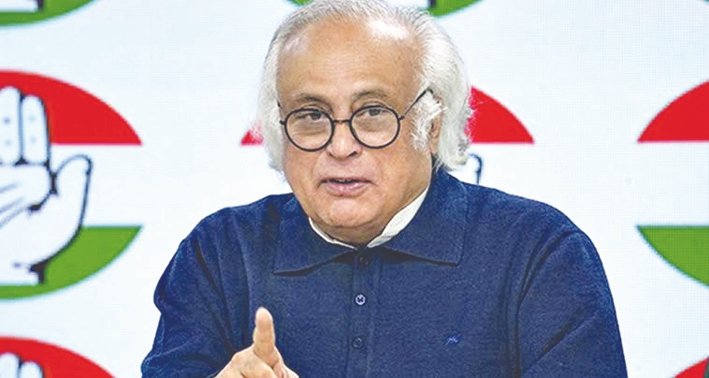
NEW DELHI, SEP 13 : Congress general secretary in-charge of communications Jairam Ramesh on Sunday questioned Prime Minister Narendra Modi’s China policy following his bilateral meeting with Chinese President Xi Jinping, raising concerns over border transgressions, China’s alleged role in the context of Operation Sindoor and India’s growing economic dependence on Beijing.
In a post on social media platform X, Ramesh said several key questions concerning the government’s China policy remained unanswered after the Modi-Xi meeting.
“Now that his bilateral summit with President Xi Jinping is over, here are four questions for Prime Minister Narendra Modi to which India continues to seek answers,” Ramesh said.
Ramesh questioned the government over what he described as a weakening of India’s position on border transgressions and China’s alleged role in the context of Operation Sindoor. He also flagged what he termed “dangerous levels of economic dependence” on Beijing.
The Congress leader’s remarks came after Modi and Xi held talks on the sidelines of the 18th BRICS Summit in New Delhi, amid continued concerns over the India-China border and efforts to stabilise bilateral relations.
India-China ties have remained strained since the 2020 military confrontation in eastern Ladakh. Although disengagement has taken place at several friction points, both countries continue to maintain substantial military deployments and infrastructure along the Line of Actual Control (LAC).
The Congress has repeatedly questioned the government over the border situation and sought greater clarity on alleged Chinese transgressions. The government has maintained that India’s territorial integrity and national security remain paramount, while diplomatic engagement with China is being pursued alongside military preparedness.
Ramesh also referred to Operation Sindoor, launched by India following the Pahalgam terror attack, and questioned the government’s position regarding China’s alleged role in the episode. He did not, however, cite specific evidence or actions in his post to substantiate the allegation.
On the economic front, Ramesh highlighted India’s continued dependence on Chinese goods and industrial inputs. China remains a major trading partner for India, while Indian industries source significant quantities of electronics, pharmaceutical ingredients, machinery, solar equipment and other critical components from the country.
The Modi government has sought to reduce this dependence through measures aimed at boosting domestic manufacturing, diversifying supply chains and attracting investment in strategic sectors. However, the scale of existing commercial linkages and the dependence of several industries on Chinese inputs make any rapid economic decoupling challenging.
The Modi-Xi meeting marked another step in renewed diplomatic engagement following years of heightened tensions. Both countries have previously stressed the importance of maintaining peace and tranquillity along the border as a basis for improving bilateral relations.
The Congress has maintained that diplomatic engagement with Beijing must be accompanied by greater transparency on security concerns and a coherent strategy to reduce economic vulnerabilities. The government, meanwhile, has maintained that dialogue, diplomatic engagement and military preparedness are being pursued simultaneously in defence of India’s national interests.