Sensex Sheds 548 Points, Nifty Slips 0.7% as Selling Pressure Returns
Published
3 min read 2 views
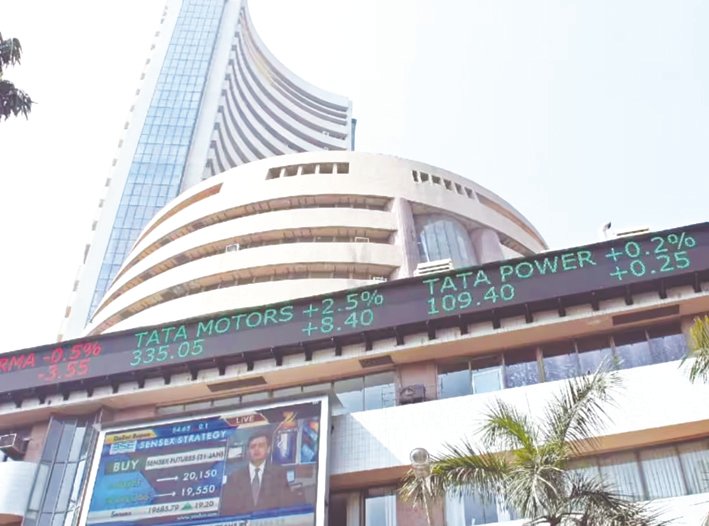
New Delhi, Oct 12 : Indian equity markets came under renewed selling pressure on Monday, reversing early gains as elevated US bond yields, persistent foreign institutional investor (FII) outflows and geopolitical uncertainties weighed on investor sentiment. The Nifty slipped towards the 22,300 mark, dragged down by losses in IT, FMCG and financial stocks.
At the close, the BSE Sensex declined 547.65 points, or 0.76 per cent, to settle at 71,924.68, while the NSE Nifty fell 157.10 points, or 0.70 per cent, to 22,363.35.
The broader market showed mixed trends, with the Nifty Midcap index ending flat, while the Nifty Smallcap index advanced 1.4 per cent.
Sectorally, the Nifty Media index led the gains, rising 4.6 per cent. The Auto index gained 0.9 per cent, Realty advanced 1 per cent, and Pharma edged up 0.3 per cent. On the other hand, IT, Metal, Private Bank, PSU Bank and FMCG indices declined between 0.4 and 1 per cent.
Among the Nifty constituents, Dr Reddy's Laboratories, Bajaj Auto, Bharat Electronics, BSE Ltd and Tata Motors Passenger Vehicles were among the major gainers. Tech Mahindra, ITC, Larsen & Toubro, Hindalco Industries and Hindustan Unilever featured among the key laggards.
Market weakness was also reflected in the number of stocks touching their 52-week lows. More than 150 stocks hit their lowest levels in a year, including Avenue Supermarts, Hindustan Unilever, NTPC, Reliance Industries, Jupiter Wagons, Bata India, MedPlus Health, Ramco Cements, TVS Holdings and Dalmia Bharat, among others.
Vinod Nair, Head of Research at Geojit Investments Ltd, said domestic markets failed to sustain their early gains as sentiment deteriorated amid a rise in the US 10-year bond yield to a three-year high and continued FII outflows driven by external uncertainties.
He noted that the rupee rebounded after the Reserve Bank of India (RBI) opened a special window to meet the dollar requirements of oil marketing companies and tightened hedging norms, helping ease pressure on the currency.
Banking stocks led the market decline after the RBI increased the daily Cash Reserve Ratio (CRR) maintenance requirement to absorb surplus liquidity. Investors are also awaiting domestic Consumer Price Index (CPI) inflation data for indications of the potential direction of monetary policy.
Nair said the Middle East remained a key source of concern, with continued Houthi attacks on Saudi and regional energy infrastructure raising fears of possible supply disruptions and keeping crude oil prices elevated.
He added that large-cap stocks remained under pressure due to foreign fund selling, while mid- and small-cap stocks outperformed on expectations of a stronger earnings season for the second quarter of FY27.