Aerospace project delays could make indigenous technology obsolete: Rajnath Singh
Published
Updated
5 min read 3 views
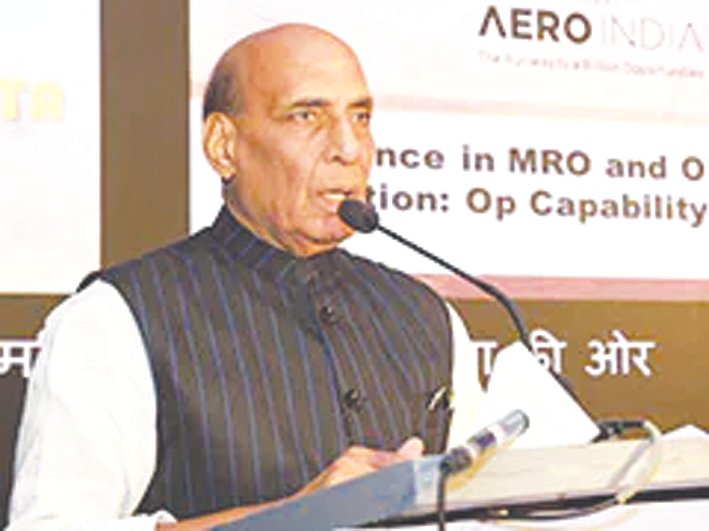
BENGALURU, Sept 18: Defence Minister Rajnath Singh on Thursday warned that delays in critical defence aerospace projects could create capability gaps, escalate costs and, in some cases, make indigenously developed technologies obsolete by the time they enter production.
Addressing a ceremony in Bengaluru to mark the handover of the LCA FOC Trainer, Dhruv Next Generation helicopters and HTT-40 basic trainer aircraft, Singh called for realistic project timelines and faster development to build a self-reliant and globally competitive aerospace sector.
“Delays in crucial defence requirements create gaps in our capability and also force us to face cost escalation,” Singh said.
He cautioned that rapid advances in global technology could render an indigenous system outdated before it reaches production. “This is what we call technology obsolescence. What we have developed sometimes becomes outdated by the time it comes into our hands,” he said.
Singh stressed that aerospace development was a gradual process and that India needed to steadily build capabilities across the entire technology chain rather than expect a “big bang” approach.
“Aerospace system development is a very gradual process. Every product and component is a small step in a long staircase. We have to move forward one step at a time,” he said.
The Defence Minister said the three achievements showcased at the ceremony represented significant milestones in India's indigenous aerospace capability and technological self-reliance.
The indigenously designed and developed Dhruv NG civil helicopter received type certification from the Directorate General of Civil Aviation (DGCA) and was handed over. The final batch of the LCA FOC Trainer was handed over to the Indian Air Force, while the first HTT-40 basic trainer aircraft from series production was also handed over to the IAF.
Congratulating Hindustan Aeronautics Limited (HAL) and its personnel, Singh said the organisation had established its credibility both in India and internationally. He noted that the Dhruv NG had already been used for offshore operations and described the integration of the DGCA-certified indigenous Shakti engine as another step towards strengthening India's aerospace capabilities.
Emphasising the importance of certification in aviation, Singh said modern helicopters could be cleared for commercial and civil operations only after meeting stringent certification requirements and undergoing extensive testing.
He said large-scale production of indigenous aerospace platforms would contribute not only to national security but also to the economy and national pride.
Singh also called for greater synergy between the civil aviation and defence sectors, saying India needed an aerospace ecosystem capable of meeting both civil and military requirements.
“A vibrant aerospace industry should not be limited to meeting defence requirements. We need an ecosystem that can effectively address the requirements of both civil and military aviation,” he said.
He said expertise developed in aircraft design, avionics, propulsion, composite materials, flight-control systems, manufacturing and certification could benefit the entire aerospace sector.
Referring to the LCA FOC Trainer, Singh said it reflected India's growing indigenous military aerospace capability and the increasing maturity of its fighter-aircraft ecosystem. He said developing a fighter aircraft was an extremely complex undertaking requiring sophisticated technology and sustained confidence.
On the HTT-40, Singh noted that every fighter pilot's journey begins with a basic trainer aircraft and recalled India's earlier dependence on imported platforms such as Hawk and Pilatus trainers. The first HTT-40 from series production being handed over to the IAF, he said, demonstrated India's ability to develop basic trainer aircraft domestically.
Singh also highlighted the aircraft's export potential and expressed confidence that the HTT-40 could attract international demand.
He said work was progressing on major programmes, including the Advanced Medium Combat Aircraft (AMCA), LCA Mk-2 and aero-engine development, as part of India's efforts to achieve greater aerospace technology self-reliance.
The Defence Minister, however, stressed the need for stronger research and development and urged young scientists, engineers and designers to work on technologies that do not exist today.
“I want to give our young scientists, engineers and designers a challenge — to create technology that does not exist today,” he said.
Singh said India should aim to develop capabilities that could place it among the leading countries in the global aerospace technology landscape in the coming decades.
He also called for a change in the relationship between the public and private sectors, saying they should be viewed as complementary rather than competing forces.
“Public and private sectors should not be seen as competition, but as supplements to each other,” he said.
While describing HAL as an important pillar of India's aerospace capability-building journey, Singh said the organisation must go beyond its existing strengths and demonstrate world-class capabilities in design, development, manufacturing, certification, life-cycle support and global markets.
He reiterated the need to address delays in technical projects and strengthen R&D capabilities to ensure that India's aerospace programmes remain relevant to future operational and technological requirements.
Singh congratulated HAL Chairman and Managing Director K Ravi, Defence Production Secretary Sanjeev Kumar, the Aeronautical Development Agency, and the engineers, scientists and industry stakeholders involved in the programmes.
India's objective, he said, should not merely be self-reliance in aerospace technology but the emergence of the country as a leading global aerospace power.