HAL CMD says aerospace self-reliance has moved from promise to reality
Published
Updated
4 min read 3 views
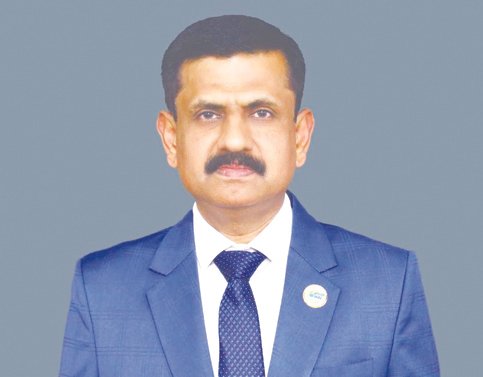
Bengaluru, Sep 18 : Hindustan Aeronautics Limited (HAL) Chairman and Managing Director K Ravi on Friday said India’s aerospace self-reliance had moved beyond the stage of a promise, with indigenous platforms now covering the spectrum from basic pilot training to fighter-pilot transition and civil helicopter operations.
“Atmanirbhar Bharat is not a promise, it is a reality taking flight on Indian-built wings,” Ravi said at a ceremony here attended by Defence Minister Rajnath Singh, Civil Aviation Minister Ram Mohan and Chief of Air Staff Air Chief Marshal Amarpreet Singh.
His remarks came as HAL handed over the indigenously developed HTT-40 basic trainer aircraft and LCA Tejas FOC trainer to the Indian Air Force, while the Dhruv NG helicopter received type certification for civil operations.
Describing the occasion as a significant milestone for both HAL and the country, Ravi said the three developments represented interconnected stages in the maturation of India’s aerospace ecosystem.
The HTT-40 is a turboprop, tandem-seat basic trainer designed for ab-initio flight training. Ravi said the aircraft had been designed, engineered, flight-tested and certified entirely in-house by HAL.
He said the aircraft had undergone rigorous evaluation, including spin trials, and featured stable low-speed handling characteristics, realistic stall and spin behaviour and a modern glass cockpit to familiarise trainee pilots with the digital environment of advanced aircraft.
The civil type certification of Dhruv NG marks an expansion of the indigenous helicopter’s role beyond military operations. The helicopter is designed for challenging operating environments and has potential applications in offshore oil and gas operations, emergency medical services and commercial transport.
Ravi said Dhruv NG would provide an indigenous alternative to imported helicopters and has significant indigenous content. More than 100 MSMEs, startups, private-sector partners and academic institutions are involved in its design, development and production, he said.
Turning to the LCA Tejas trainer, Ravi described the programme as one of the country’s most complex fighter aircraft development efforts, involving fly-by-wire flight controls, flight-control law development, a composite airframe, radar and avionics integration and weapons-system certification.
The twin-seat LCA Tejas FOC trainer handed over to the IAF retains the combat capability of the single-seat fighter while providing a second cockpit for instructor pilots to train pilots transitioning from basic flying training to an operational combat-capable platform.
More than 500 private-sector partners, including over 350 MSMEs, are part of the LCA programme, Ravi said.
He stressed that the three achievements could not be attributed to HAL alone, acknowledging the contribution of the Indian Air Force, DRDO, certification agencies, private-sector partners, MSMEs, academic institutions and aerospace startups.
“It would not be appropriate for me to stand at this podium and claim these achievements as HAL’s alone. What we celebrate today is the product of genuine national partnership,” he said.
Ravi also credited the IAF for its support during the development and evaluation process and regulatory agencies such as CEMILAC and DGCA for ensuring that the aircraft met stringent certification requirements.
He acknowledged the contribution of HAL’s engineers, technicians, quality-assurance teams and test pilots in overcoming the complexities of aerospace design, manufacturing and flight testing.
“What we hand over today is more than aircraft. We hand over confidence,” he said, referring to the confidence of trainee pilots flying the HTT-40, pilots transitioning to the Tejas trainer and operators deploying the Dhruv NG in civil roles.
The HAL CMD said the developments demonstrated how indigenous aerospace capability was being built across design offices, manufacturing facilities, flight-testing establishments and the wider industrial ecosystem.
He said the three platforms represented different stages of aviation capability but shared a common foundation of Indian design, engineering, manufacturing and certification.
The ceremony was attended by senior officers of the Indian Air Force, DRDO, regulatory bodies, HAL’s board and senior management, along with representatives of public-sector organisations, private companies, MSMEs and startups.