BRICS 2026: India Faces Major Diplomatic Test in New Delhi
Published
Updated
3 min read 3 views
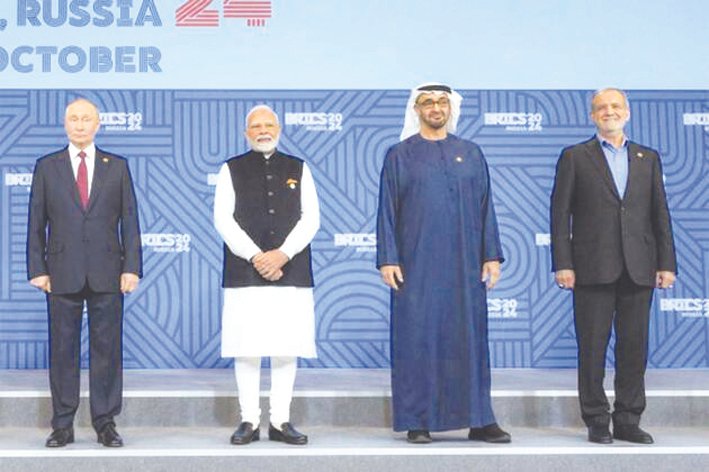
NEW DELHI, SEPT 11: New Delhi is set to become the diplomatic centre of the Global South as India hosts the 18th BRICS Summit at Bharat Mandapam on September 12 and 13, bringing together leaders of the expanded grouping amid geopolitical tensions, trade uncertainties and changes in the global economic order.
For Prime Minister Narendra Modi and the Indian government, the summit is more than the culmination of India's year-long BRICS presidency. It is a test of New Delhi's vision of strategic autonomy, a stronger voice for the Global South and practical multilateral cooperation.
India, which assumed the BRICS chairmanship on January 1 for the fourth time, has placed "Humanity First" at the centre of its presidency under the theme "Building for Resilience, Innovation, Cooperation and Sustainability."
The expanded BRICS now comprises 11 full members, extending across Asia, Africa, the Gulf, Latin America and Eurasia. While the grouping's wider membership has increased its economic and political weight, it has also made consensus more difficult.
India is expected to push for reforms of the United Nations and international financial institutions, greater development finance, improved food and energy security, wider technology access and a stronger role for developing countries in global decision-making.
The visit of Russian President Vladimir Putin and Chinese President Xi Jinping will add significance to India's diplomatic balancing act. Modi is scheduled to hold bilateral talks with Putin on September 11, while his meeting with Xi is expected on the sidelines of the summit on September 12. Modi is also scheduled to meet Iranian President Masoud Pezeshkian.
Economic cooperation is expected to be a major focus. India is seeking greater market access, investment, technology partnerships, resilient supply chains and more efficient payment mechanisms among BRICS economies.
Digital payments, fintech, central bank digital currencies and greater use of national currencies are likely to receive attention. India is expected to promote payment interoperability rather than pursue a common BRICS currency.
Energy security, critical minerals, smart grids, energy storage, healthcare, agriculture, food security, artificial intelligence and digital public infrastructure are also expected to feature prominently.
However, differences within the grouping remain a major challenge. Disagreements at the BRICS foreign ministers' meeting in New Delhi in May prevented the adoption of a joint communique, underlining the difficulty of reaching consensus on contentious geopolitical issues.
India's challenge will therefore be to keep BRICS focused on areas where practical cooperation is possible despite political differences.
The summit is also an opportunity for India to demonstrate its ability to host major international gatherings. Bharat Mandapam, which hosted the 2023 G20 Summit, will once again be the centre of global diplomacy, with extensive security and traffic arrangements in place across the national capital.
The success of India's BRICS presidency will ultimately depend not on the size of the summit or the strength of its declarations, but on whether it delivers greater trade and investment, resilient supply chains, technology cooperation, development finance and a stronger voice for the Global South.
For New Delhi, BRICS 2026 is therefore not merely a summit to host, but a significant test of diplomatic statecraft.