Jairam Ramesh Cites Nehru, Vajpayee, Manmohan to Challenge Modi’s Russia Ties Narrative
Published
Updated
3 min read 3 views
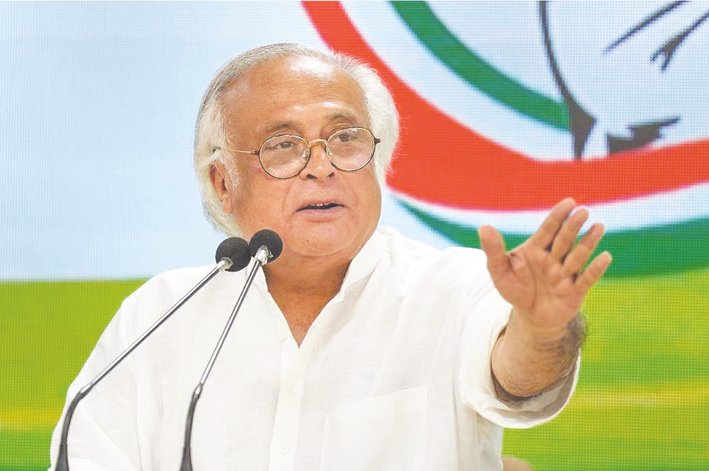
NEW DELHI, Sep 11: Congress general secretary in-charge of communications Jairam Ramesh on Thursday invoked the history of India’s engagement with Russia, arguing that the country’s deep and enduring ties with Moscow are the result of decades of strategic, industrial and technological cooperation, rather than a relationship that began under Prime Minister Narendra Modi.
In a post on social media platform X, Ramesh described the erstwhile Soviet Union as an “invaluable partner” in India’s developmental journey since the 1950s. He credited Soviet assistance with helping build critical sectors including steel, heavy engineering, mining, power, oil and gas, chemicals, defence, space and nuclear technology.
Ramesh traced the early consolidation of India-Soviet ties to a series of high-level exchanges in 1955. Then Prime Minister Jawaharlal Nehru undertook a 16-day visit to the Soviet Union in July that year, followed by a 20-day visit to India by Soviet leaders Nikolai Bulganin and Nikita Khrushchev in November-December.
He also highlighted the significance of the Indo-Soviet Treaty of Peace, Friendship and Cooperation, signed in New Delhi on August 9, 1971, after more than two years of negotiations. The treaty became a major strategic pillar of India’s relationship with Moscow and was concluded against the backdrop of Cold War rivalries and growing tensions in South Asia.
According to Ramesh, the relationship survived the dissolution of the Soviet Union in December 1991, despite an initial “hiatus”, before gaining renewed momentum in 1998 under Russian Prime Minister Yevgeny Primakov and subsequently being strengthened under President Vladimir Putin.
Ramesh cited the BrahMos missile programme as a key example of the evolution of India-Russia ties from conventional defence cooperation to joint development and technological partnership. He said the joint venture, which had been around seven years in the making, was finalised by Putin with Prime Minister Atal Bihari Vajpayee and later expanded substantially under Prime Minister Manmohan Singh.
He pointed to the establishment of BrahMos complexes in New Delhi, Hyderabad and Thiruvananthapuram as evidence of the depth and continuity of the partnership.
“The point is simple: whatever the self-advertisement by Mr. Modi, there has been a history of strong ties between India and Russia, the solid foundations of which were laid during the 1950s-1980s,” Ramesh said.
His remarks come at a time when India-Russia ties have assumed renewed geopolitical importance, with New Delhi seeking to preserve its longstanding strategic partnership with Moscow while simultaneously expanding its engagement with the United States, Europe and other major powers.
Defence has traditionally been the backbone of India-Russia relations, but cooperation has also extended to energy, nuclear power, space, technology and other strategic sectors.
Ramesh also recalled a personal episode highlighting the institutional legacy of India-Soviet cooperation. He said Russian President Dmitry Medvedev, who preceded Putin in the presidency, visited IIT Bombay on December 22, 2010, and spent a few minutes looking at what Ramesh described as a “completely forgotten symbol” of the foundations of Indo-Soviet cooperation established nearly half a century earlier.
Ramesh said the site was located next to the PC Saxena Lecture Theatre, which he had frequently visited during his years at IIT Bombay.
“Here is a photo of that spot on campus right next to the PC Saxena Lecture Theatre, which was also part of my daily life from 1963 to 1975,” he said, linking his personal recollection to the broader history of India’s institutional and strategic partnership with Russia.