Modi Highlights Terror Response, Census, Heritage and Grassroots Initiatives in 138th Mann Ki Baat
Published
Updated
5 min read 3 views
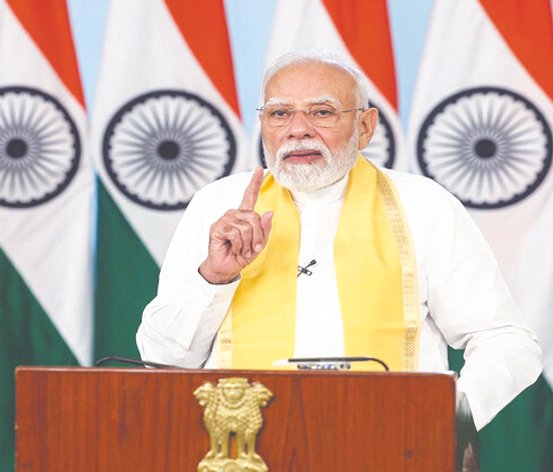
New Delhi, Sep 27 : Prime Minister Narendra Modi, in the 138th episode of his monthly radio programme Mann Ki Baat on Sunday, highlighted India’s response to terrorism, the ongoing Census, heritage conservation and a range of citizen-led initiatives in environment protection, nutrition, sports and rural enterprise.
Recalling the 10th anniversary of the September 28-29, 2016 surgical strikes, Modi said the Indian Army’s operation across the Line of Control demonstrated what he described as a new approach to counter-terrorism. Referring to the Balakot airstrike and Operation Sindoor, he said India had repeatedly conveyed that terrorist attacks would draw a strong response.
Modi also recalled the 2008 Delhi serial blasts and the 26/11 Mumbai terror attacks, saying the country had suffered the consequences of terrorism for decades. He said India now follows a policy of “zero tolerance” towards terrorism. He also paid tribute to the victims of the September 11, 2001 attacks in the United States, noting the loss of Indian lives in the World Trade Center attacks.
A significant portion of the broadcast was devoted to the ongoing Census, which Modi described as a “national responsibility”. He said data relating to more than 32 crore families had already been recorded in the first phase and that enumeration was continuing even in remote and snow-bound areas.
The Prime Minister encouraged citizens to use the self-enumeration facility through the Census portal. According to him, more than 2.6 crore people had already completed self-enumeration. He said the digital facility was available in 16 languages besides Hindi and could be completed using a mobile phone without uploading documents.
Marking the birth centenary of Ashok Singhal, former international working president of the Vishwa Hindu Parishad, Modi recalled his contribution to the Ram Janmabhoomi movement and his wider social and cultural activities. He also highlighted what he described as lesser-known aspects of Singhal’s work, including efforts against social discrimination and inequality.
Modi subsequently turned to India’s historical and architectural heritage, highlighting the Somnath temple and Gujarat’s Modhera Sun Temple. He said the rebuilding and preservation of such monuments reflected the resilience of Indian society. He also highlighted Modhera’s transformation into what he described as India’s first solar village, linking heritage conservation with sustainable development.
Ahead of Gandhi Jayanti on October 2, Modi appealed to citizens to intensify cleanliness drives. He cited community initiatives involving river and well restoration, beach cleaning, waste segregation and the cleaning of public spaces in different parts of the country. He said such efforts reflected the spirit of “Jan Bhagidari”, where individual initiatives develop into community movements.
Environmental conservation was another major theme. Modi referred to the return of elephants to Assam’s Sonai Rupai Wildlife Sanctuary following the removal of encroachments from forest land. He also highlighted conservation efforts for the pygmy hog in Assam, saying its population had increased from six to more than 190 under a dedicated conservation programme.
In West Bengal’s Sundarbans, he highlighted women in Jharkhali who are involved in mangrove plantation. He said the initiative was helping protect villages from environmental threats while also creating livelihood opportunities for women, including those who had lost their husbands in tiger attacks.
The Prime Minister also spoke about the 100-week Nasha Mukt Yuva Abhiyan aimed at raising awareness among young people about substance abuse. He said MY Bharat volunteers, NSS members, educational institutions and social and spiritual organisations were participating through awareness programmes, street plays, competitions, pledge campaigns and other activities.
On sports, Modi highlighted efforts to identify talent in villages and smaller towns. He referred to former hockey player and coach Rajinder Singh, a member of India’s 1980 Olympic gold medal-winning team, and his work through the Round Glass Hockey Academy to identify young players and provide them with coaching and better sporting infrastructure.
Rural enterprise and women’s self-help groups also featured in the programme. Citing Pratapgarh in Uttar Pradesh, traditionally associated with amla, Modi said the One District One Product initiative had created new opportunities in amla cultivation and processing. He said around 100 processing units were operating in the district, while women’s self-help groups were producing amla candy, preserves, juice, pickles and other products.
Modi urged citizens to support indigenous products during the festive season and reiterated his call for “Vocal for Local”, encouraging products made in villages and small towns to reach markets across India and abroad.
On nutrition, Modi highlighted initiatives undertaken during Nutrition Month, including Chhattisgarh’s campaign promoting moringa consumption, a millet-based food competition in Gujarat and nutrition-awareness programmes involving teachers, Anganwadi workers and parents in Maharashtra. He said around nine crore beneficiaries were registered on the Poshan Tracker, which digitally links Anganwadi centres and helps monitor children, pregnant women and breastfeeding mothers.
Concluding the broadcast, Modi highlighted the international reach of Indian cultural traditions, particularly the worship of Lord Ganesha in Thailand. He referred to Thai devotee Panthoun Thirkhanon, who has studied Ganesha traditions for more than four decades and established the Ganesha Himal Museum in Chiang Mai in 2002. The museum, he said, houses more than 10,000 Ganesha idols and showcases traditions including Maharashtra’s Ashtavinayak.
Modi concluded by urging citizens to continue sharing stories of inspiring work in their communities and said recognition of such efforts could encourage similar initiatives elsewhere. He also extended greetings for the upcoming festive season and called for collective participation in building a cleaner, healthier, self-reliant and developed India.