Netanyahu Seeks Trump’s Stronger Backing Ahead of Israeli Elections
Published
3 min read
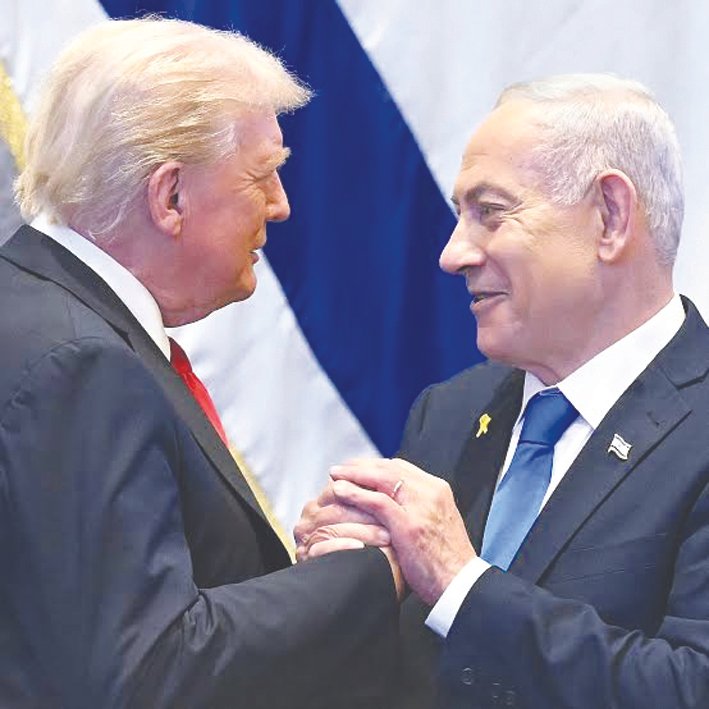
Jerusalem/Washington, Oct 26 – Israeli Prime Minister Benjamin Netanyahu has reportedly urged US President Donald Trump to extend stronger public support to his re-election campaign ahead of Tuesday’s Knesset elections, amid opinion polls indicating that his ruling bloc could fall short of securing a parliamentary majority.
According to a US source familiar with the matter, the White House views Netanyahu’s repeated efforts to seek Trump’s backing as a “sign of desperation”, suggesting that the Israeli leader believes he is trailing in the electoral race.
However, Neta Molcho, a spokesperson for Netanyahu’s Likud party, denied that the Prime Minister had asked Trump to support his campaign in recent days or before the US President issued his endorsement. The White House did not respond to requests for comment.
The US source said Netanyahu had spoken to Trump twice during the preceding three days and urged him to reinforce his endorsement, which he had posted on Truth Social the previous week. Netanyahu had also suggested wording for additional statements of support, the source added.
An Israeli source briefed on the matter said Netanyahu had proposed that Trump speak to Israeli media representatives to reiterate his backing.
Trump had told Newsmax two weeks ago that people in Israel had approached him to intervene in support of Netanyahu. On Sunday evening, he issued another endorsement, urging Israeli voters to re-elect Netanyahu and praising his hardline position on Iran.
In a post on Truth Social, Trump described Netanyahu as an “outstanding Warrior Prime Minister” and highlighted their close working relationship, calling on Israelis to vote for him to complete their shared objectives.
Trump had previously endorsed Netanyahu the Sunday before, following weeks of hesitation, and even suggested that Netanyahu’s defeat could have implications for US-Israeli relations.
Netanyahu is the only Israeli Prime Minister with whom Trump has worked, and the two leaders have maintained a close, though occasionally turbulent, relationship. Trump does not personally know the other candidates in the Israeli electoral contest.
Three major Israeli television networks released their final pre-election opinion polls on Friday, all projecting 50 seats for Netanyahu’s bloc in the 120-member Knesset, 17 fewer than the strength of his current coalition.
Netanyahu’s Likud party, which currently holds 32 seats, was projected to secure only 20. The polls estimated that the opposition bloc led by former military chief Gadi Eisenkot could win between 52 and 56 seats, while two Arab Israeli parties were projected to secure another 14 to 16 seats.
Channel 11 also forecast four seats for a reservists’ party that is not aligned with either political bloc.
However, pro-Netanyahu Channel 14 differed significantly, projecting 60 seats for Netanyahu’s bloc and 30 for Likud in a survey released earlier in the week.
A US official described Trump's endorsement as a potential win-win for the American President, irrespective of the election outcome.
If Netanyahu wins or continues as caretaker Prime Minister, Trump could claim credit for helping him politically and potentially use that influence to seek concessions. If Netanyahu loses and opposition leaders form the next government, Israel’s new leadership would still have strong incentives to maintain close relations with Washington, limiting the long-term impact of Trump's endorsement of his rival.
Some of Trump's advisers also see a possible opportunity to advance his West Asia agenda under an Israeli government led by someone other than Netanyahu.