
BCIC chief urges I-T Department to ‘go slow on scrutiny’ during transition to new tax law
Published
Updated
4 min read 4 views
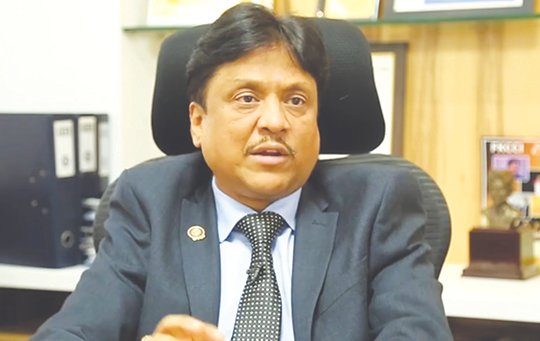
Bengaluru, Sept 7: The Income Tax Department should adopt a cautious approach to scrutiny during the initial transition to the new Income Tax Act, 2025, as taxpayers, businesses and tax professionals need adequate time to understand and adapt to the new framework, Bangalore Chamber of Industry and Commerce (BCIC) President K Ravi said on Monday.
Speaking to UNI on the sidelines of a conference on the new Income Tax Act and Rules, Ravi said excessive scrutiny during the transition could undermine the government’s objective of simplifying taxation.
“Where there are these sorts of interpretations, the government should give people time to understand. Mistakes are bound to happen on either side,” he said.
Ravi said transitional provisions were among the biggest concerns under the new tax regime, particularly in determining whether the Income Tax Act, 1961, or the new 2025 Act would apply to pending demands, appeals and other proceedings.
“In the name of simplification, we should not get into another area of complication where interpretation is required as to whether we should take the old Act or the new Act,” he said.
He estimated that chartered accountants, tax lawyers and businesses could take at least two to three years to fully understand and implement the new law.
“The law has to come down first to professionals like chartered accountants and tax lawyers. They are ultimately the people who have to implement it. My gut feeling is that even to understand the new rules and law, it will take a minimum of two to three years,” Ravi said.
He suggested that the government consider clearing pending appeals under the old regime to enable the new Act to begin without the burden of accumulated disputes.
“Let the new Act start without our old baggage,” he said.
Ravi acknowledged the government’s efforts to simplify the legislation by reducing the number of sections and rules and removing repetitive provisions. However, he said industry feedback would be crucial in identifying errors and omissions that could emerge during implementation.
“Drafting the law is one thing, but practical implementation can throw up a lot of challenges,” he said.
Ravi said the new framework had the potential to reduce tax disputes and make taxation easier to understand. “I am positive that it will improve. A lot of rules and sections have been reduced and repetitive definitions have been removed. This is a step in the right direction,” he said.
However, he stressed that effective implementation would determine the success of the reform. “Formulating the Act and Rules is the first step. What is more important is implementing the law in its true spirit,” he said.
Calling for greater trust between the Income Tax Department and taxpayers, Ravi said businesses were willing to pay taxes but wanted certainty and simpler compliance.
“Business people are ready to pay tax. They want simplicity. They want to concentrate more on the business and less on compliances,” he said.
On MSMEs, Ravi said the new income-tax framework was unlikely to impose a significant additional burden on smaller businesses, though compliance under several other laws remained a challenge.
“As far as income tax is concerned, I don't find MSMEs being affected. There are various other laws which make compliance tough, but income tax itself is not something I see affecting MSMEs,” he said.
He also highlighted the role of technology in improving tax administration, citing faster refunds, the Annual Information Statement and faceless assessments.
“Technology has helped assessees to a great extent, whether it is filing tax returns, getting refunds or scrutiny,” Ravi said.
Ravi said the ultimate objective should be to ensure ease of paying tax alongside ease of doing business. He called for selective scrutiny focused on cases where there was evidence of tax evasion rather than making it a routine burden for compliant taxpayers.
“I would say ease of paying tax is equally important. The trust factor is very, very important. The department also has to trust the assessees and the assessees should trust the department,” he said.