Future Astronauts Must Work Independently Without Earth Support: Sunita Williams
Published
Updated
5 min read 3 views
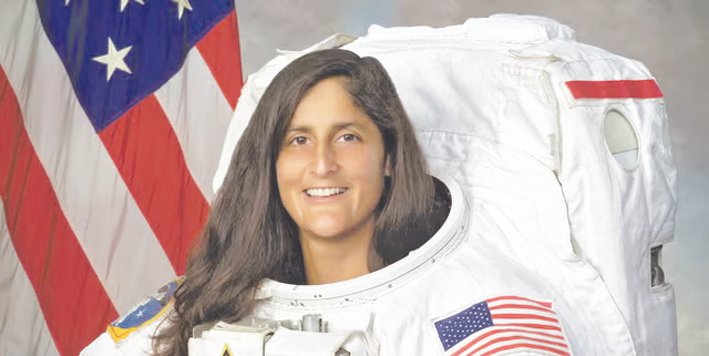
Bengaluru, Sept. 9 : Future space stations must enable astronauts to access information, troubleshoot equipment and analyse scientific and medical data independently, reducing their reliance on teams on Earth as human missions venture farther into space, veteran astronaut Sunita Williams said on Wednesday.
Speaking at the 9th Bengaluru Space Expo 2026, Ms. Williams said technologies that are commonplace on Earth, such as instant access to information and computer-assisted problem-solving, cannot be taken for granted in space.
“Everybody in this room has had a question in their mind and then pulled out their phone and was able to find the answer. That's not as easy on the International Space Station,” she said.
Astronauts aboard the International Space Station currently depend heavily on communication with ground teams to obtain information and resolve technical problems. According to Williams, this model will become increasingly difficult as humans travel beyond low-Earth orbit, where communication delays can prevent astronauts from receiving immediate assistance.
“We rely on good communications back on the ground,” she said, expressing hope that future space stations would carry comprehensive databases that astronauts could access independently.
“If we can have a database of that, then we could be a little less reliant on the folks on the ground,” Williams said, stressing that such capability would be critical to the safety and effectiveness of future missions.
She said astronauts frequently face situations in which they must determine how to repair equipment or respond to unexpected problems, making immediate access to technical information particularly important.
Williams also highlighted the need for reliable 3D printing technology in future space missions. She noted that even seemingly simple tasks, such as printing on paper, can be challenging in microgravity because many machines designed on Earth rely on gravity to function.
“It’s a switch in how machines operate to think about how to make a machine that doesn't need gravity to operate. Because here on Earth, that's how we design everything,” she said.
The veteran astronaut also called for greater autonomous scientific and medical capabilities aboard future space stations. She said experiments conducted on the ISS often require data or samples to be sent back to Earth for analysis, creating another layer of dependence on ground infrastructure.
“Every time we did an experiment, we had to send data back to the ground or a piece of part of that experiment back to the ground for analysis. We need to be able to do that ourselves autonomously, if we're going to take those next steps,” she said.
Such capabilities would be important for medical research as well as scientific experiments, allowing astronauts to analyse results and make decisions without waiting for instructions or assistance from Earth.
Williams said the ISS had provided invaluable experience in understanding how humans could live and work in space for extended periods. Research aboard the station has included hydroponic plant cultivation, stem-cell research, DNA sequencing, materials science and biological studies.
She said hydroponic experiments were helping scientists understand how to provide plants with the nutrients they need, knowledge that could prove valuable for future space stations and lunar bases.
“All of these experiments are not going to happen just right now. These are things that happen over time,” she said, emphasising that accumulated knowledge from the ISS would form an important foundation for future human exploration.
Williams said research into human biology was particularly significant for understanding how people could remain healthy during long-duration missions. Future space exploration, she added, would require more than simply transporting astronauts into orbit; it would require technologies and systems that allow humans to remain productive and increasingly self-reliant away from Earth.
She also underlined the importance of international cooperation in human spaceflight, saying the ISS had demonstrated the benefits of bringing together different countries, technologies and approaches.
“It’s wonderful because we get to see how other people, other cultures think and how other people in other cultures solve problems,” she said.
Such cooperation, she added, would become even more important as humanity returns to the Moon and eventually ventures farther into space.
“As a human being, when we leave lower orbit, we go back to the Moon and farther. I mean, we are going as human beings,” Williams said.
She said astronauts would encounter challenges that had not yet been anticipated on Earth and would therefore benefit from sharing experiences and approaches from different parts of the world.
“It would be nice to share experiences from all over the world, as we go and try to tackle those problems,” she said.
Williams said the emergence of new commercial and government space stations offered an opportunity to incorporate advanced technologies into their designs from the outset. Implementing major technological changes aboard the ISS at this stage would be difficult, she noted, as the station has been operating for more than 25 years and involves complex infrastructure and processes.
“I think it would be very difficult to implement some of these ideas on the International Space Station at this juncture,” she said.
However, the development of new-generation space stations presents an opportunity to build advanced capabilities into their infrastructure from the beginning.
“From the ground up, I think we have the opportunity to implement some of these,” Williams said.
Her remarks come as India prepares to expand its human spaceflight programme beyond Gaganyaan, with longer-duration human missions, the proposed Bharatiya Antariksh Station and eventual lunar exploration forming part of the country's broader space ambitions.