Karnataka drought declaration triggers political battle; 25 more taluks under consideration
Published
Updated
3 min read 4 views
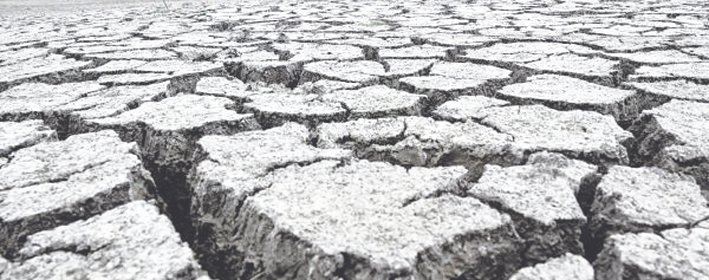
Bengaluru, Sept 8 : Karnataka's worsening drought situation has sparked a political battle, with farmers and legislators demanding wider coverage of drought-hit areas as the State government considers adding 25 more taluks to the second list.
The government had identified drought conditions in 202 taluks and, based on prescribed norms, has so far officially declared 101 taluks drought-hit, including 89 under the severe drought category and 13 under moderate drought. Ground-truth reports from another 25 taluks have been received and are being examined for inclusion in the next list.
The failure of the monsoon and declining groundwater levels have severely affected rain-fed and dryland farming across several parts of the State. Standing crops have withered, farmers are struggling to repay loans, and livestock owners are facing shortages of fodder.
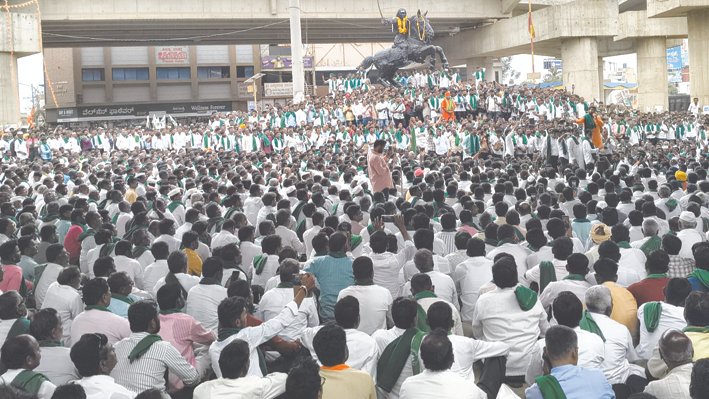
The proposed second list has triggered intense lobbying by legislators seeking drought status for their constituencies. JD(S) MLA Sharanagouda Kandakur staged a protest near the Gandhi statue at Vidhana Soudha, demanding that Gurmitkal and Yadgir be declared drought-hit. Legislative Council Opposition Leader Chalavadi Narayanaswamy and former Deputy Chief Minister C N Ashwath Narayan supported the protest.
The Opposition has accused the government of discrimination in the drought assessment, pointing out that only 17 of the 101 declared taluks are represented by BJP and JD(S) legislators. BJP leaders have alleged that drought assessment should not be influenced by political considerations and urged the government to act on the basis of the actual distress faced by people.
The controversy has also led to differences within the ruling Congress. Senior Muddebihal MLA Appaji Nadagouda alleged that his constituency was deliberately excluded from the drought list and accused Minister M B Patil of political interference.
Mr Patil rejected the allegation, saying he had no role in preparing the drought list and that the assessment was carried out by officials in accordance with prescribed guidelines. He maintained that drought declaration cannot be based on political considerations.
Chief Minister D K Shivakumar has sought to allay the growing discontent, saying more taluks could be included once technical assessments and ground-truth reports are completed.
"There are reports coming in and many more taluks will be declared drought-hit. We have already conducted assessments in several places. The decision has to be based on technical reports," he said.
The government has maintained that drought declaration must follow prescribed criteria, including sustained rainfall deficiency and assessments of crop and ground conditions. However, legislators and farmers have argued that technical assessments do not always reflect the actual extent of crop losses and rural distress.
The drought has also raised concerns over its wider economic impact. A decline in agricultural production could affect farmers' incomes, livestock, food supplies and, eventually, consumer prices if the dry spell persists.
What began as an exercise to identify drought-affected areas has now turned into a political contest, with Congress leaders raising concerns over individual constituencies, the BJP and JD(S) alleging discrimination, and farmers demanding immediate relief and official recognition of their distress.
With ground-truth reports from 25 more taluks already available, the government now faces the challenge of ensuring that the second drought list is based on a transparent and objective assessment while providing relief to affected communities without further delay.