Kasturirangan row turns political as Karnataka urged to follow Kerala model
Published
Updated
3 min read 5 views
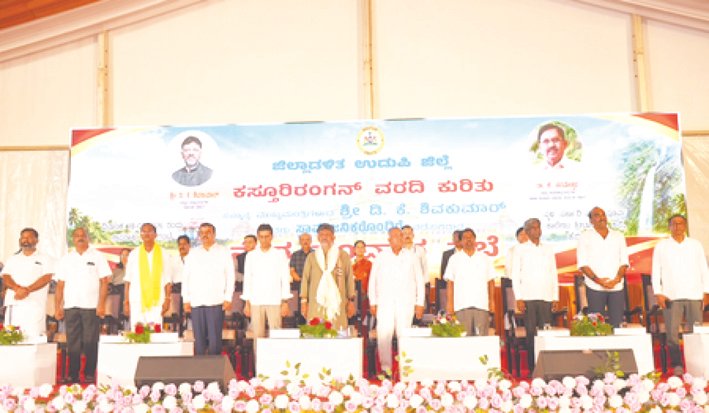
Bengaluru, Sept 19 : The Kasturirangan report on the Western Ghats has emerged as another flashpoint in Karnataka's Centre-State and Congress-BJP political contest, with growing demands for the State to constitute an expert panel on the lines of Kerala to assess the ground realities before any further move on the contentious recommendations.
The Karnataka government has opposed implementation of the recommendations, citing concerns of farmers and residents in the Western Ghats. The issue has also become a political battleground, with the ruling Congress and BJP trading charges over the Centre's stand and the State government's handling of the matter.
Amid the political exchanges, questions are being raised over why Karnataka has not yet constituted an independent expert panel to conduct a comprehensive field-level assessment of the areas covered by the Kasturirangan recommendations.
Supporters of the proposal are pointing to Kerala's experience, where the Oommen V Oommen Committee was constituted to examine the implications of the recommendations and assess concerns emerging from the ground.
The Kerala committee highlighted concerns over satellite-based identification of ecologically sensitive areas, particularly in cases where plantations, agricultural land and inhabited areas were included along with forest areas. It advocated field verification to distinguish forests from human settlements, cultivated land and plantations.
A similar approach is now being sought in Karnataka. The proposed panel could visit the Western Ghats, conduct field inspections and consult farmers, local residents, gram sabhas and environmental experts before preparing a State-specific report.
Such a report could provide a documented basis for Karnataka's negotiations with the Centre, shifting the debate from political statements and protests towards a field-based assessment of the actual impact of the recommendations.
The Kasturirangan recommendations proposed declaring about 37 per cent of the Western Ghats as ecologically sensitive and suggested restrictions on mining, quarrying and sand mining, besides restrictions on certain industries and new thermal power projects. Hydropower projects were proposed to be subjected to detailed environmental assessment.
The controversy has consequently acquired two distinct dimensions — protection of the ecologically fragile Western Ghats and the potential impact of the proposed restrictions on communities dependent on agriculture, plantations and other local livelihoods.
The demand for a Kerala-style committee has further sharpened the debate over Karnataka's approach to the Kasturirangan report. Supporters of the proposal argue that a comprehensive field-based assessment could establish precisely which areas and communities would be affected and provide the State with evidence to seek changes in the recommendations while addressing environmental concerns.