Kharge Challenges Modi on China Policy, Seeks Answers on Border Security and Trade Deficit
Published
5 min read 2 views
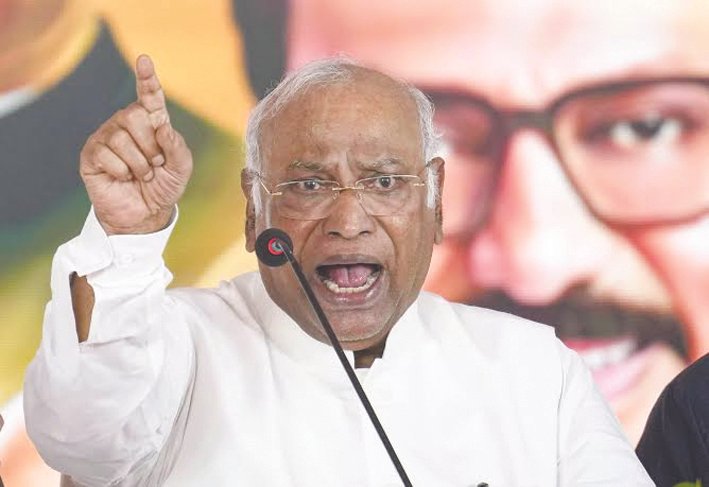
New Delhi, Oct 23 : Congress president and Leader of the Opposition in the Rajya Sabha Mallikarjun Kharge on Friday challenged Prime Minister Narendra Modi to explain the government's China policy, raising concerns over reported military confrontations in Arunachal Pradesh, India's widening trade deficit with Beijing and the outcome of repeated diplomatic engagements between the two countries.
Accusing the government of giving China “enough clean chits”, Kharge urged Modi to “come clean before India” and demanded accountability on national security, economic interests and diplomatic efforts.
In a post on social media platform X, Kharge referred to reports of continuing face-offs between Indian forces and China's People's Liberation Army (PLA) in Arunachal Pradesh. Citing the reported confirmation by the Director General of the Indo-Tibetan Border Police (ITBP) that confrontations were continuing in the region, he questioned whether another serious border standoff was unfolding following the Doklam confrontation and the deadly Galwan Valley clash in June 2020, in which 20 Indian Army personnel were killed.
Kharge also referred to reports of Chinese incursions near Taksing in Arunachal Pradesh in August and questioned why confrontations were reportedly continuing even 47 days after Corps Commander-level talks at Wacha-Damai, around 180 km from the affected area.
“Has India's patrolling access been compromised?” he asked, asserting that Arunachal Pradesh was an inseparable part of India. He also questioned why the government was not providing greater clarity on developments along the frontier.
The India-China border dispute has remained a major security and diplomatic challenge since the Galwan clash. Although both countries have held military and diplomatic negotiations to ease tensions along the Line of Actual Control (LAC), questions over patrolling arrangements and the restoration of the pre-May 2020 status quo continue to figure prominently in the Opposition's criticism.
Turning to economic relations, Kharge accused the government of allowing India's dependence on Chinese imports to increase despite its emphasis on self-reliance and domestic manufacturing through initiatives such as Make in India.
He claimed that Chinese imports had increased by 102 per cent since the 2020-21 financial year, while India's trade deficit with China had risen by 155 per cent to USD 112.16 billion. He also cited Finance Minister Nirmala Sitharaman's reported acknowledgement that China was obstructing Indian exports.
Questioning the gap between the government's stated economic objectives and its approach towards Beijing, Kharge asked, “Has Make in India become Import from China?”
He sought an explanation on how the government intended to strengthen domestic manufacturing, reduce import dependence and protect Indian industries while the trade imbalance with China continued to widen.
India has been seeking to expand domestic production and diversify supply chains while maintaining commercial links with China, a major supplier of manufactured goods and industrial inputs. Restrictions on investments from countries sharing a land border with India were introduced in 2020 amid heightened security concerns, making any relaxation of these measures a politically sensitive issue.
Kharge's third set of questions concerned the outcome of sustained diplomatic engagement between Modi and Chinese President Xi Jinping.
Referring to at least 23 reported meetings and interactions between the two leaders, 25 rounds of talks involving National Security Adviser Ajit Doval as Special Representative, and 36 meetings of the Working Mechanism for Consultation and Coordination on India-China Border Affairs (WMCC), he questioned what concrete gains India had achieved.
He also referred to meetings held on the sidelines of the Shanghai Cooperation Organisation and BRICS summits, asking whether these engagements had resulted in a lasting resolution of the border dispute or restored India's patrolling rights to the position prevailing before May 2020.
“Have India's pre-May 2020 patrolling rights been fully restored?” he asked, emphasising that the Opposition wanted verifiable outcomes rather than diplomatic assurances.
Kharge said the armed forces enjoyed the Opposition's complete confidence but maintained that the political leadership had a responsibility to explain the situation along the border.
“National security demands accountability, not diplomatic photo opportunities and 'Hugplomacy',” he said, criticising what he described as an excessive reliance on high-profile personal diplomacy without adequate public disclosure of its results.
The Congress president also accused the Prime Minister of targeting the Opposition instead of answering substantive questions about China. He urged Modi to take Parliament and the country into confidence on the military situation along the frontier, the restoration of patrolling access and the government's strategy to address India's economic dependence on Beijing.
The Congress has repeatedly questioned the government's handling of relations with China since the 2020 border crisis, seeking clarity on the status of the frontier and the restoration of arrangements that existed before the confrontation.
The government, meanwhile, has continued military and diplomatic negotiations aimed at maintaining peace and stability along the border.
By linking the military standoff with the widening trade deficit and the record of diplomatic engagement, Kharge has sought to make China policy a broader test of the government's foreign policy and strategic autonomy. He questioned whether repeated meetings and negotiations with Beijing had translated into demonstrable gains for India's territorial security, economic interests and national priorities.