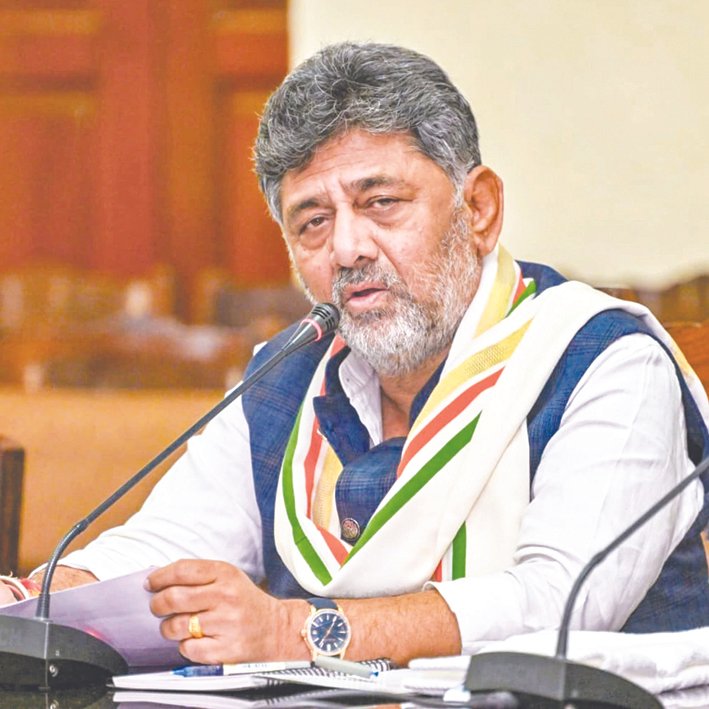
PFRDA admits neglect of informal workers, steps up efforts to expand pension coverage
Published
4 min read 1 views

Bengaluru, Oct 24 : The Pension Fund Regulatory and Development Authority (PFRDA) has acknowledged that it failed to give adequate attention to India's vast informal workforce and self-employed population and is now stepping up efforts to bring these sections under the National Pension System (NPS).
PFRDA Chairperson S. Ramann said the regulator had traditionally focused more on corporate employees, leaving a large section of workers outside the employer-employee framework without adequate awareness of pension savings schemes.
"This is an area which we have only now taken up. It is, in fact, our failure not to have given enough importance to this segment, which is a very large segment in India," Ramann said during a media interaction here.
He pointed out that the informal sector included not only low-income earners but also high-income self-employed professionals and others who lacked access to employer-linked retirement savings arrangements.
The regulator is launching awareness campaigns and deploying teams to educate these sections about NPS and its benefits. Ramann stressed that the initiative would require the participation of distributors, the media and other outreach networks.
As part of its expansion strategy, PFRDA is relying on digital platforms such as Star NPS and Tatkal NPS to simplify enrolment and improve access to pension products. These platforms aim to combine assisted onboarding through pension agents with a direct digital process for subscribers familiar with UPI-based transactions.
Ramann said Tatkal NPS was expected to attract higher enrolment due to the widespread familiarity with digital payments, while Star NPS, which involves greater assistance from pension agents, might take longer to gain momentum.
To encourage distribution, the regulator is offering pension agents incentives of Rs 200 for Star NPS transactions and Rs 100 for Tatkal NPS transactions, with the difference reflecting the additional effort involved in the assisted model.
The platforms could also enable mutual fund distributors and other eligible individuals to offer pension services to their existing customers without significant additional infrastructure costs, he said.
PFRDA is targeting a potential base of 60 crore working people who use UPI to expand pension coverage. However, Ramann clarified that this was a long-term ambition rather than an immediate enrolment target and achieving it could take until 2045.
The regulator is also focusing on protecting first-time subscribers from unsuitable products and misleading advice. In this regard, it has introduced Pension Sahayak, an automated, AI-enabled grievance redressal system that uses machine learning to address subscriber queries and complaints.
The system will help monitor grievances and identify possible cases of mis-selling across the country, enabling timely intervention when subscribers face difficulties.
Ramann said digital interfaces would increasingly display the relative risk levels of pension schemes to help customers make informed investment decisions rather than depend entirely on distributors.
On cybersecurity, he said Central Recordkeeping Agencies (CRAs), which form the digital backbone of the pension system, were under close regulatory supervision. PFRDA was also working with the Ministry of Electronics and Information Technology to bring CRAs within the framework applicable to critical information infrastructure.
Turning to the Atal Pension Yojana (APY), Ramann said actuarial studies and modelling exercises were under way to review its asset allocation and strengthen inflation protection for subscribers.
He said PFRDA wanted more eligible subscribers to opt for the maximum guaranteed pension of Rs 5,000 per month while improving the investment framework to protect the purchasing power of retirement income.
On NPS investment performance, Ramann cautioned against judging the scheme based on short-term equity market movements. He advised subscribers to assess returns over longer periods, particularly five, seven and 10 years.
He also recommended life-cycle funds for subscribers approaching retirement, as these funds automatically reduce equity exposure with age and help manage market volatility closer to retirement.
PFRDA is working to simplify corporate enrolment through digital mechanisms that will allow employees to associate themselves with their employers for NPS participation.
Providing an update on Tatkal NPS, Ramann said around 12 to 13 banks had been integrated with the platform, of which approximately six or seven had gone live.
He said the regulator's broader challenge was to convert digital access into sustained pension participation among workers who had traditionally remained outside formal retirement savings systems.