PM Modi launches Gujarat projects worth Rs 14,000 crore, releases Rs 18,000 crore PM-KISAN funds
Published
7 min read 2 views
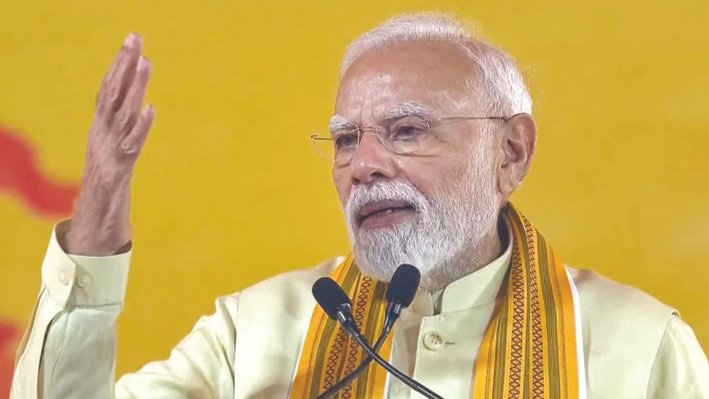
New Delhi, Oct 30 : Prime Minister Narendra Modi on Friday unveiled and dedicated development projects worth more than Rs 14,000 crore in Gujarat's Banaskantha district and released the latest instalment of the PM-KISAN Samman Nidhi, transferring more than Rs 18,000 crore directly into the bank accounts of nearly 10 crore farmers across the country.
Addressing a gathering at Bhildi, Modi said the development initiatives covered agriculture, dairy, animal husbandry, railways, highways, metro connectivity, urban infrastructure, food processing and child welfare, reflecting the government's commitment to strengthening rural livelihoods and accelerating infrastructure development.
The major projects include the Bharat Bovine Breeding and Research Centre, expansion of Banas Dairy's potato-processing facilities, two biogas projects, new railway services and the foundation stones for important road and metro connectivity projects.
Emphasising the government's focus on farmers, Modi said the agricultural budget had increased more than fivefold compared with 2013-14. He claimed that farmers had received financial assistance and savings exceeding Rs 50 lakh crore through various government schemes and interventions over the past several years.
Referring to the PM-KISAN scheme, fertiliser subsidies, minimum support prices, crop insurance and solar-powered irrigation pumps, he said these initiatives had strengthened farmers financially and enhanced agricultural productivity.
According to Modi, nearly Rs 4.5 lakh crore had been transferred directly to small farmers under PM-KISAN, while around Rs 16 lakh crore had been spent to protect farmers from fluctuations in international fertiliser prices. Wheat and paddy farmers had received Rs 24 lakh crore through MSP procurement over the past 12 years, while compensation exceeding Rs 2 lakh crore had been disbursed under the Pradhan Mantri Fasal Bima Yojana, he said.
He also highlighted the distribution of nearly 12 lakh solar-powered agricultural pumps under the PM-KUSUM scheme, saying they had reduced farmers' dependence on conventional electricity and diesel.
Pointing out that small farmers account for more than 85 per cent of the country's farming community, Modi said the government had focused on their needs through direct financial assistance, modern technology and rural infrastructure. He also referred to the distribution of more than 26 crore Soil Health Cards and the introduction of nearly 3,000 new seed varieties to help farmers adapt to changing climatic conditions.
A major highlight of the programme was the inauguration of the Bharat Bovine Breeding and Research Centre, established across 127 acres at a cost of Rs 328.77 crore. The facility aims to promote conservation, scientific breeding and genetic improvement of indigenous cattle and buffalo breeds, particularly the region's Kankrej breed.
Modi said advanced reproductive technologies, including in-vitro fertilisation and embryo transfer, would be used to improve the genetic quality and productivity of indigenous livestock. Breeds such as Gir, Sahiwal and Kankrej cattle, along with Mehsana, Murrah and Jaffarabadi buffaloes, would receive special attention.
He stressed that improved breeding practices, timely vaccination and better veterinary facilities could increase milk production and the income of livestock-owning households, particularly women who play a significant role in India's dairy economy.
Referring to the nationwide vaccination campaign against foot-and-mouth disease, Modi said nearly 150 crore vaccine doses had been administered to livestock, benefiting animals belonging to more than eight crore farmers. He also said India's average daily milk productivity per animal had increased from less than five litres in 2013-14 to around eight litres, making the country the world's largest milk producer.
The Prime Minister called for greater utilisation of cattle dung and agricultural waste to produce biogas, bio-CNG and organic fertilisers, describing them as additional sources of income for rural households. Foundation stones for two biogas-related projects at Tharad and Radhanpur were laid during the programme.
He said dairy cooperatives, particularly Banas Dairy, had an important role in developing an integrated rural economy by linking milk production, waste management and renewable energy.
The expansion of Banas Dairy's potato-processing facilities was another significant component of the development package. The upgraded infrastructure, including an expanded French fries manufacturing facility and automated storage arrangements, is expected to strengthen the procurement and processing of potatoes grown in North Gujarat.
Modi said the expansion would provide better market access to potato growers and create opportunities for agricultural value addition. He also referred to the approval of 12 horticulture clusters covering potatoes, tomatoes, chillies, grapes, bananas, onions, oranges, pomegranates and cocoa. Two clusters earmarked for North Gujarat are expected to benefit potato farmers in Banaskantha and Sabarkantha.
Recalling the transformation of Banaskantha during his tenure as Gujarat Chief Minister, Modi said improved irrigation, the availability of Narmada water and the adoption of micro-irrigation techniques had changed the agricultural landscape of the district.
He urged farmers to conserve water and electricity, adding that Narmada water and modern technologies such as drip irrigation had transformed the region and helped Banaskantha's potatoes gain international recognition.
Highlighting the importance of allied agricultural activities, Modi said India's seafood exports had more than doubled and honey production had also doubled over the past 12 years. India had emerged as the world's second-largest exporter of natural honey, with women-led self-help groups making an increasingly important contribution.
On the infrastructure front, Modi laid the foundation stones for the Ahmedabad Metro Phase 2A and 2B extensions, which are expected to improve connectivity between major urban and economic centres, including GIFT City and the airport.
He also announced the widening of the Ahmedabad-Mehsana highway from four lanes to eight lanes at an estimated cost of around Rs 2,600 crore.
The Prime Minister flagged off two new railway services — the Ahmedabad-Varanasi Sabarmati Express and the Mehsana-Becharaji-Sabarmati MEMU service — to improve regional and intercity connectivity.
In the social sector, more than 4,000 modern Anganwadi centres were launched in Gujarat. These facilities are expected to benefit approximately four lakh children and pregnant women by strengthening early childhood care, nutrition and related services.
Reflecting on his 25 years in public office, Modi described the occasion as significant, saying it marked his first visit to Banaskantha after completing 25 years as the head of a government. He recalled that his first major public programme after becoming Gujarat Chief Minister in 2001 was organised in Deesa, where a Lok Kalyan Mela attracted nearly three lakh people.
Describing his political journey as one shaped by the people of Gujarat, he said their experience and guidance had helped him understand the requirements of governance and public service.
Turning to the ongoing international situation, Modi accused Opposition parties of spreading rumours and creating panic over the availability of fertilisers and cooking gas amid the conflict involving Iran and countries in the Gulf region.
Defending the government's handling of fertiliser supplies, he said India had ensured that farmers did not face shortages despite international disruptions and rising prices.
He said a bag of urea costing around Rs 3,000 in the international market was being made available to Indian farmers for less than Rs 300, while DAP fertiliser, whose international price had risen above Rs 5,000, was being supplied domestically for approximately Rs 1,350. The government was bearing the additional financial burden to protect farmers and maintain agricultural production, he added.
Calling for national unity amid international uncertainty, Modi urged citizens, particularly young people, to participate in the Run for Unity on Saturday, October 31, to mark the birth anniversary of Sardar Vallabhbhai Patel and National Unity Day.
He announced that the annual Ekta Parv celebrations at Ekta Nagar would be held at 5.30 pm instead of in the morning to accommodate the Run for Unity and other programmes. The celebrations would feature a large parade by police and security forces, accompanied by tableaux, recalling the spirit of the Republic Day celebrations in New Delhi.
Inviting people from across the country to join the celebrations, Modi said the occasion should renew the national commitment to the vision of 'Ek Bharat, Shreshtha Bharat'.
He maintained that the development initiatives launched in Gujarat were part of a broader national effort to build a prosperous, self-reliant and developed India, with farmers, women and young people playing a central role in the country's transformation.