Sonia Gandhi's memoir 'Belonging' explores love, loss and memories of a life shaped by history
Published
3 min read 2 views
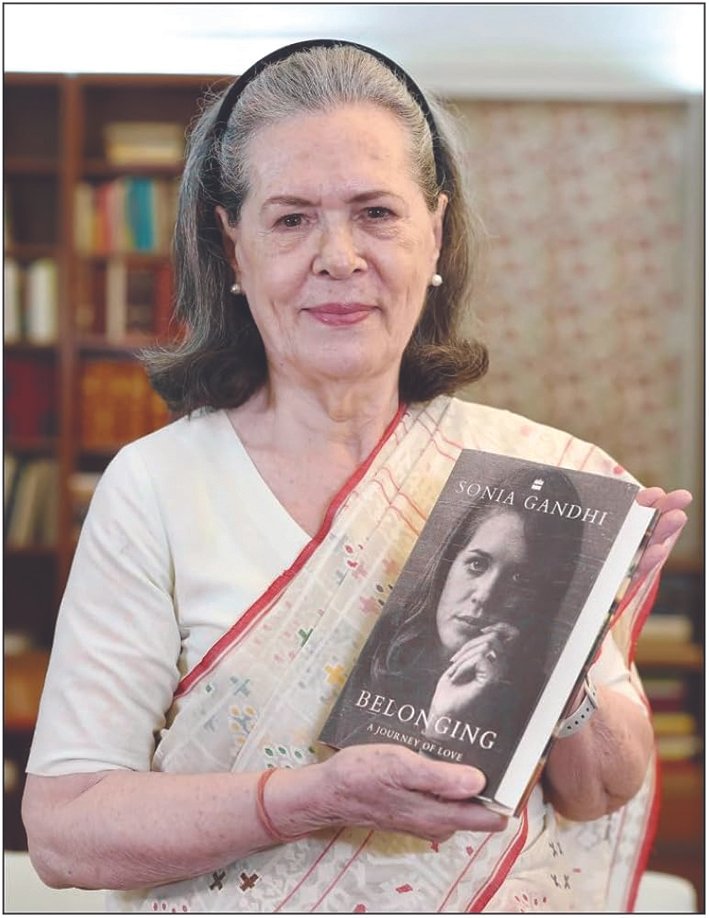
New Delhi, Oct 27 : After decades of being written about, analysed and interpreted by others, Congress leader Sonia Gandhi is preparing to share her life story in her own words through her forthcoming memoir, 'Belonging: A Journey of Love', which explores love, family, public life, personal loss and the meaning of belonging.
"There’s bound to be some tamasha when this book comes out. After all, others have spent decades telling my 'story'; now it's my turn," Sonia Gandhi says in a video clip shared on Instagram, reflecting the central idea behind the memoir.
Born in Italy, Sonia Gandhi came to India after marrying Rajiv Gandhi in 1968 and gradually made the country her home. Her life became closely connected with one of India's most influential political families, as she witnessed events that profoundly transformed both her family and the nation.
A short film accompanying the book features black-and-white photographs of Sonia Gandhi, Rajiv Gandhi, Indira Gandhi and their family. The photographs capture intimate moments of family life, offering glimpses of an era that has since become part of history.
Recalling the circumstances that led Rajiv Gandhi into politics, Sonia says she was "totally against" his becoming prime minister. Her recollections offer an insight into the personal anxieties and difficult choices behind decisions that shaped Indian politics.
Rajiv Gandhi entered politics following the death of his younger brother, Sanjay Gandhi, in 1980. After the assassination of then Prime Minister Indira Gandhi in 1984, he assumed the country's top political office.
For Sonia, the transition from private family life to the centre of national affairs was accompanied by tragedy and enormous responsibility.
Explaining why she decided to write the memoir, Sonia says much of what had been written about her was "not quite correct" and was "either invented or exaggerated". Through the book, she seeks to present her own account of events and experiences that others have described over the years.
"People have different views. Some people may change their view about you. Some people's views may become worse," she says, acknowledging that a personal memoir cannot necessarily change public perceptions.
The title 'Belonging' reflects the deeper journey of finding a home and identity in a country that was initially unfamiliar to her. For Sonia, that sense of belonging developed through marriage, family relationships, shared experiences and her gradual connection with India.
However, her journey was also marked by profound grief. Rajiv Gandhi's assassination in 1991 brought a devastating personal loss that became part of the nation's collective memory.
Sonia later entered active politics, became Congress president in 1998 and remained one of the most influential figures in Indian public life for decades.
Yet, beyond political positions and public responsibilities, the memoir focuses on the personal experiences that shaped her life, including family relationships, remembered conversations, photographs and the lasting impact of those she has lost.
'Belonging' offers readers an opportunity to look beyond Sonia Gandhi's public image as a Congress leader and a member of the Nehru-Gandhi family, presenting a more personal account of a woman whose life unfolded amid extraordinary political circumstances.
The memoir is likely to generate debate and differing reactions, as Sonia herself anticipates. However, its central purpose appears to be reclaiming her voice and presenting her perspective on a life that has been discussed and interpreted for decades.
Through memories, photographs and reflections on love, family and loss, 'Belonging: A Journey of Love' seeks to present history not merely through political events but also through the private lives and emotions of those who experienced them.