Iran Hits Back at Rubio Over ‘Death Cult’ Remarks, Accuses US of Targeting Its Civilisation
Published
4 min read 2 views
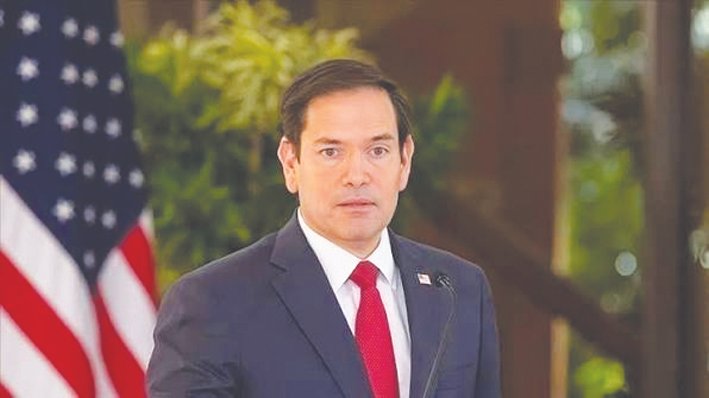
Tehran, Oct 10 : Iran has strongly criticised US Secretary of State Marco Rubio over his remarks describing Iranian resistance as a “death cult”, accusing Washington of applying double standards by praising resistance in Western history while condemning it when demonstrated by Iran.
Senior Iranian officials, including Ali Akbar Velayati, an adviser to Iran’s Supreme Leader, and Foreign Ministry spokesperson Esmaeil Baghaei, challenged Rubio’s interpretation of ancient Greek history and its connection to contemporary tensions between Washington and Tehran.
Velayati said Rubio’s remarks contained a glaring contradiction in how resistance and national identity were portrayed.
“There is a glaring contradiction in Rubio’s recent speech: Standing firm ‘to the last man’ is praised in the context of ancient Greece, yet the steadfastness of the great Iranian nation is disparaged with the label of a ‘death cult’,” Velayati said in a post on X.
“Mr Rubio, your problem is not with the Islamic Revolution; it is with a strong and independent Iranian civilisation,” he added.
Velayati accused Washington of praising resistance when it served American interests while condemning similar determination in other nations. He described such an approach as dishonest rather than a genuine defence of civilisation.
He also referred to US-led military interventions and wars in Hiroshima, Vietnam, Iraq and Afghanistan, arguing that those responsible for the resulting destruction were not in a position to lecture others on morality.
Baghaei, meanwhile, accused Rubio of portraying Western civilisation as an uninterrupted historical continuum stretching from ancient Greece to the modern United States, while selectively invoking Greek philosophy to justify power and national ambition.
In a post on X, Baghaei criticised Rubio’s remarks at the Acropolis, arguing that they merged distinct historical and cultural traditions into a single narrative culminating in the contemporary American political outlook.
He described the approach as an “anachronism”, saying it distorted historical understanding by combining different periods and traditions, including Greece, Rome, Christianity, Europe and America, under a unified narrative associated with the “America First” doctrine.
Baghaei also challenged Rubio’s interpretation of the ancient Greek concept of “thumos”, which is associated with spirit, passion, courage and a sense of honour.
According to Baghaei, Rubio had removed the concept from its historical and philosophical context and recast it as a celebration of power, competition and national will, overlooking the Greek tradition’s emphasis on the dangers of aggression and excessive ambition.
“Greece was not only a theater of power and glory. It was also the birthplace of the tragedy of hubris and aggression,” Baghaei said, referring to literary and philosophical works such as Homer’s Iliad, Thucydides’ History of the Peloponnesian War, Plato’s Republic, Aristotle’s Politics and Sophocles’ tragedies.
He argued that these works offered enduring reflections on imperial ambition, the limits of authority, moral responsibility and the consequences of unchecked power.
Baghaei accused Washington of selectively invoking history to legitimise its present-day policies and military posture, saying such an approach transformed historical inquiry into a political instrument.
“What emerges is not a philosophy of history, but a manufactured narrative designed to authorise US militancy and to construct a convenient political myth,” he said.
He added that history was being used to portray contemporary political choices as inevitable and historically justified, rather than as decisions that should be examined critically.
Baghaei further argued that using historical narratives to legitimise what he described as the unlawful and unjust use of force undermined the purpose of studying the past.
Citing Russian artist Vasily Vereshchagin’s painting The Apotheosis of War, which depicts a pyramid of human skulls, Baghaei said the artwork offered a powerful counterpoint to narratives glorifying conquest and military victory.
He said the painting highlighted the human cost of conquest and the devastation left behind when power was celebrated at the expense of human life.
Baghaei called on Western intellectuals to defend the complexity of their own historical and philosophical traditions against what he described as a selective and apologetic interpretation designed to justify military aggression.
“The danger lies not merely in misreading the past, but in appropriating it to authorise that force, and to aggrandise it, in the present,” he said.
The exchange comes amid continuing tensions between Iran and the United States following the US-Israeli war against Iran and ongoing disputes surrounding the strategically important Strait of Hormuz.