Rahul Gandhi Steps Up Attack on Centre, Says Gyanesh Kumar and Modi Government Will Go
Published
3 min read 1 views
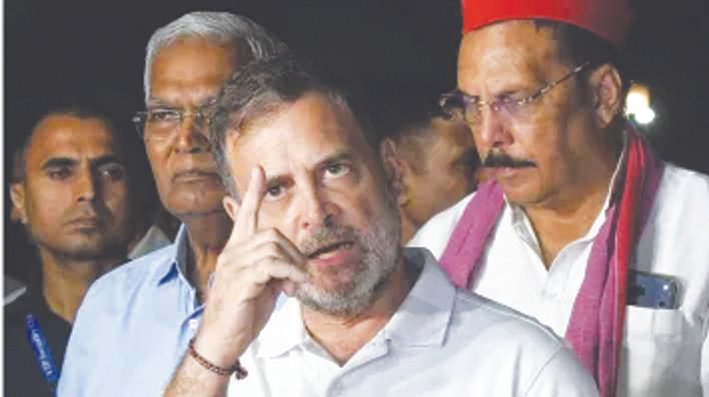
New Delhi, Oct 10 : Leader of the Opposition in the Lok Sabha Rahul Gandhi on Saturday intensified his attack on the Narendra Modi government and Chief Election Commissioner Gyanesh Kumar, declaring that both would go as opposition parties stepped up their campaign over alleged irregularities in the electoral process.
“Gyanesh Kumar will go. This government will go. Then the repair of democracy will begin,” Gandhi said in a post on X.
His remarks came amid heightened political mobilisation over the Special Intensive Revision (SIR) of electoral rolls and ahead of a protest called by the Cockroach Janata Party (CJP) at Jantar Mantar against what it describes as the erosion of electoral democracy. Security arrangements were tightened across the national capital in anticipation of the demonstration.
Gandhi also shared a video message addressed to MPs of the INDIA bloc, urging opposition members to sustain their campaign against the Centre and the Election Commission. He linked the demand for Kumar's removal to the broader opposition effort to safeguard electoral integrity and democratic institutions.
The Congress leader has repeatedly questioned the functioning of the Election Commission, alleging that it has failed to adequately address concerns over irregularities in the electoral process. The demand for Kumar's removal has emerged as a key component of the opposition's campaign against the SIR exercise, which opposition parties fear could lead to the wrongful exclusion of eligible voters.
The controversy has intensified following reports that Election Commissioners Vivek Joshi and Sukhbir Singh Sandhu had raised objections on several occasions to aspects of the Commission's functioning, including procedures related to electoral roll revisions and the addition, deletion and restoration of voters' names.
Opposition parties have cited these reports to strengthen their allegations of institutional lapses and what they call “vote chori”. They have demanded greater transparency in the revision of electoral rolls, stronger safeguards against wrongful deletions and an effective mechanism for voters to challenge errors in the lists.
The Election Commission, however, has defended its procedures, maintaining that electoral roll revisions are conducted in accordance with the applicable legal framework.
The dispute has brought renewed attention to the Commission's decision-making processes, the safeguards available to voters whose names may be deleted and the transparency of procedures governing the revision of electoral rolls.
Opposition parties argue that public confidence in elections depends on the Election Commission's independence, impartiality and willingness to address allegations of procedural lapses. The government and the poll panel have maintained that electoral processes are governed by law.
By asserting that the Modi government would go, Gandhi sought to broaden the political significance of the controversy beyond the tenure of the Chief Election Commissioner, presenting it as part of a wider struggle over democratic accountability and electoral credibility.
The confrontation between the opposition and the Centre over the SIR exercise and the functioning of the Election Commission is expected to remain a major political issue, with opposition parties continuing to press for greater transparency and accountability in the electoral process.