Karnataka CM Shivakumar Dismisses BJP Protest Over Finance Dept’s Fiscal Warning
Published
Updated
3 min read 3 views
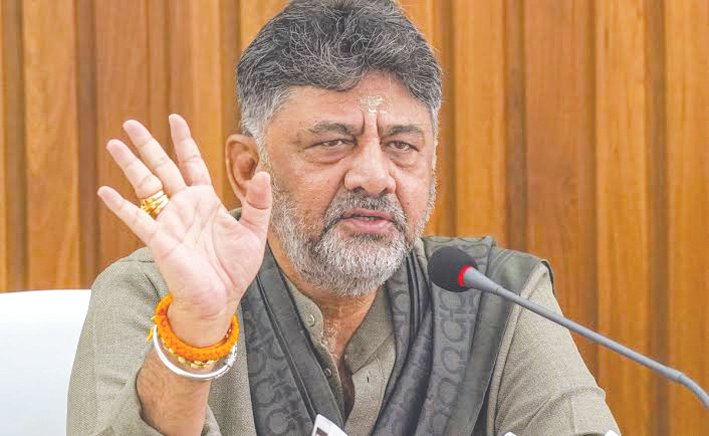
Bengaluru, Sep 24 : Karnataka Chief Minister and Finance Minister D K Shivakumar on Thursday dismissed the BJP’s protest over a recent Finance Department warning on the state’s financial position, saying such advisories are part of the department’s routine functioning.
The controversy arose after the Finance Department cautioned the government to exercise prudence in expenditure and remain prepared for budgetary cuts while examining a proposal for a Rs 10,000-crore rural road connectivity scheme.
The department noted that Karnataka’s liabilities stood at around 24.94 per cent of its Gross State Domestic Product (GSDP), close to the 25 per cent ceiling under the Fiscal Responsibility and Budget Management framework. It also flagged the balance cost of ongoing works at more than Rs 2 lakh crore and pending bills of Rs 36,136 crore across four major departments — Public Works, Water Resources, Minor Irrigation, and Rural Development and Panchayat Raj.
The Finance Department further warned that the prevailing drought could require substantial additional expenditure on drought relief and drinking water. It estimated that another Rs 4,000-5,000 crore could be needed for irrigation pump-set subsidies, potentially affecting allocations to other departments unless additional resources were mobilised.
Shivakumar said such cautions were routinely issued by the Finance Department under successive governments, including those led by former chief ministers B S Yediyurappa and Basavaraj Bommai.
“Regarding the BJP’s protest holding empty pots, it was an advice given by the Finance Department. The department issues such cautions, and that is its duty,” he said.
The Deputy Chief Minister, who also holds the Finance portfolio, had earlier acknowledged the concerns raised in the note and said the government would have to decide which programmes should continue and which could be reduced.
“Being a finance minister I know which programmes to cut down and which to continue with. We need to survive with these five guarantees amid the inflation. There is nothing wrong in their advice,” he had said.
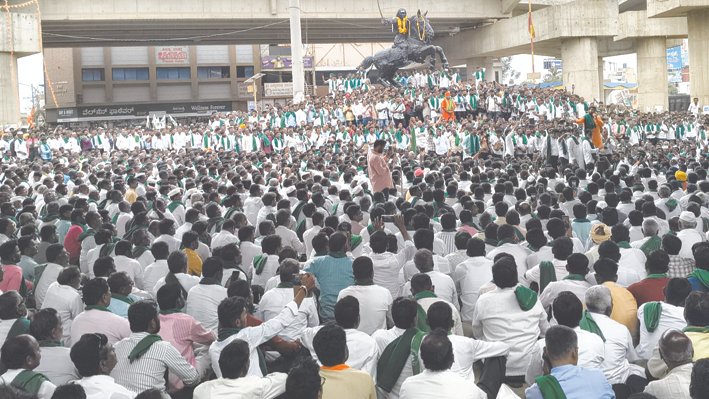
The BJP staged a protest at Vidhana Soudha with empty pots and coconut shells, alleging that the Finance Department’s warning reflected the government’s financial difficulties. BJP leaders demanded a White Paper on the state’s finances and sought Shivakumar’s resignation.
The BJP has also alleged that Karnataka is being pushed into a debt trap and questioned the government’s decision to make new financial commitments despite the Finance Department’s caution against taking up projects without budgetary provision. These remain Opposition allegations.
The Finance Department’s note also stated that the state had already exhausted its borrowing capacity for the year’s budgetary announcements, leaving limited scope for additional borrowing to finance projects of the proposed scale.
The issue has brought renewed attention to Karnataka’s fiscal headroom, existing expenditure commitments, drought-related requirements and the government’s ability to finance new projects while continuing ongoing programmes.
Shivakumar also referred to the drought situation, saying both the state and the Centre could face additional financial pressures. He has separately written to Prime Minister Narendra Modi seeking the immediate release of 50 per cent of the drought-relief amount sought by Karnataka as interim assistance, besides the advance release of the Centre’s share of the second instalment of the State Disaster Response Fund.
Responding to the BJP’s demand for his resignation, Shivakumar said, “They want my resignation. Okay, let them have it.”
The proposed Rs 10,000-crore rural road connectivity scheme and other projects announced following the recent Cabinet meeting in Mangaluru are likely to remain part of the wider debate over the state’s finances.