Sitharaman urges industry to back tax proposals with data, move beyond rate cuts and exemptions
Published
Updated
4 min read 4 views
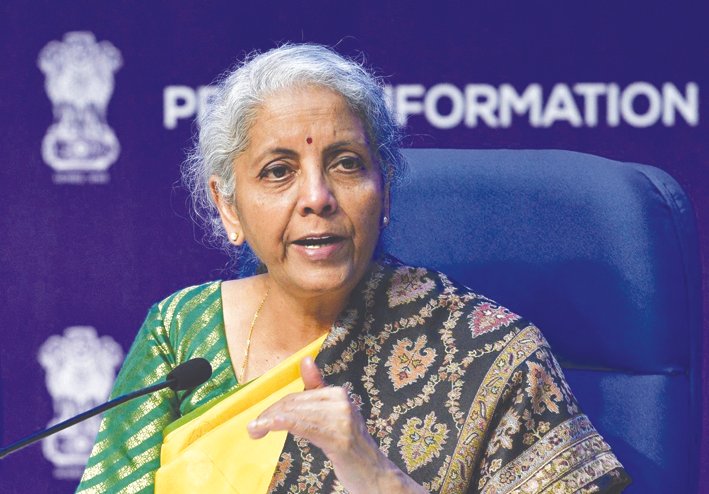
Bengaluru, Sep 16 : Union Finance Minister Nirmala Sitharaman on Wednesday urged industry and professional bodies to move beyond demands for tax rate cuts, exemptions and concessions and instead support their policy recommendations with data on compliance costs, revenue implications and possible unintended consequences.
Addressing an ITRA conference in Bengaluru, Sitharaman said tax consultations should be a meaningful exercise based on “evidence, experience and ideas”, rather than merely an opportunity for stakeholders to submit representations.
“Year after year, a very large part of the representation eventually comes down to three requests — reduce a rate, provide an exemption, or grant a concession,” she said.
The Finance Minister called for a more mature tax policy debate that examines whether existing provisions continue to serve their intended purpose, including provisions that currently benefit businesses.
“If a provision is set to impose an excessive compliance burden, tell us how many taxpayers it affects, how much time or cost it imposes and what an alternative would mean for revenue,” she said.
She also asked stakeholders to assess the broader impact of proposed changes, including their effect on the tax base, tax administration and other taxpayers.
Sitharaman said India needs stronger and more independent tax policy research as it works towards the goal of Viksit Bharat 2047. She urged the Institute of Research on Taxation (ITRA) to emerge as a leading independent institution for tax policy research and analysis.
India has economists, tax lawyers and chartered accountants of high calibre, she said, but needs an institution capable of bringing their expertise together and giving their research greater visibility in the policy-making process.
Referring to institutions such as the Institute for Fiscal Studies in the UK and the International Bureau of Fiscal Documentation in Amsterdam, Sitharaman said India needed more rigorous and visible independent research on taxation.
She said the government follows a consultative process ahead of Union Budgets and major tax reforms by engaging industry, professional bodies, experts and other stakeholders.
“Tax policy therefore is not and it should not be a one-sided exercise for the government,” she said, adding that stakeholders outside government often identify the practical consequences of tax provisions before policymakers do.
Sitharaman also highlighted several tax reforms, including the reduction of corporate tax to 22 per cent in 2019, rationalisation of personal income tax, replacement of the Income Tax Act, 1961, with a new Income Tax Act, faceless assessment and appeals, pre-filled returns and updated returns.
She said TDS and TCS provisions had been progressively rationalised, while measures such as Vivad Se Vishwas and higher monetary thresholds for departmental appeals had helped reduce tax litigation.
On GST, the Finance Minister said reforms since its introduction in 2017 had simplified indirect taxation, while restructuring the rate structure had helped reduce classification disputes.
On international taxation, she highlighted India's renegotiation of tax treaties with Mauritius, Singapore and Cyprus, adoption of the Multilateral Instrument, country-by-country reporting, automatic exchange of information and measures targeting undisclosed foreign income.
She also referred to India's advance pricing agreement programme and tax measures concerning global funds, virtual digital assets and global capability centres.
Looking ahead, Sitharaman said India's tax system would need to address emerging challenges linked to artificial intelligence, robotics, the gig economy, global mobility, virtual digital assets and global capability centres.
“Global capability centres are Bengaluru's question above all others,” she said, pointing to the growing presence of such centres in the city.
The Finance Minister welcomed the ITRA conference's focus on emerging tax issues rather than rates, exemptions and deductions, and urged participants to submit concrete and quantifiable policy alternatives.
She said research that measures compliance costs, identifies the number of taxpayers affected and models revenue implications would be more useful to policymakers than criticism that remains purely qualitative.
Sitharaman said India's tax policy must generate the revenue required for development while remaining fair, predictable and administrable, and supporting investment, enterprise and innovation.